Dark Matter Matters
mission
A modest proposal to save The New York Times
I love The New York Times, the best newspaper in the world. There is no greater pleasure than sitting out on the patio on a Sunday morning, reading The New York Times, and learning.
 I stress the word learning because there are so few places left in our world where true discovery happens. Most of the time, marketers, computers, and even our friends are showing us more of what we already know we like, rather than introducing us to things we have never seen or heard of before.
In the pages of The New York Times, I can be introduced to people, places, events, ideas I would have never found on my own. Every day I read The Times I learn something new. The paper expands my understanding of the world rather than reflecting back to me the understanding I already have.
This is an incredibly valuable service. It is a service that very few media companies in the world still provide (my local paper, the Raleigh News and Observer, rarely does these days, sadly).
Yet, the ongoing conversation about how to solve the financial issues of The New York Times revolves around fixing the business model for newspapers. Most experts say the model is fundamentally broken, and a report released last week by the Pew Research Center’s Project for Excellence in Journalism doesn’t have a lot of good news for the future of journalism as a whole.
From my vantage point, the answer to fixing The New York Times will not come from exploring a revolutionary business model. It will come from a revolutionary brand, culture, and community model. Let me explain.
Democracy: a reason for communications and HR folks to party together
I recently finished the new book Digital Strategies for Powerful Corporate Communications, by Paul Argenti and Courtney Barnes. I must admit, I’m allergic to many Web 2.0 books. This book does have some of that social media handbook feel, but I was excited about it because co-author Paul Argenti, a professor of communications at Dartmouth, is someone whose ideas about communications have really influenced my thinking over the past few years.
 Paul was one of the masterminds behind The Authentic Enterprise, a whitepaper that may be one of the most compelling looks into the future of the communications field I have ever seen. I’ve written about it previously here, here, and here.
The following paragraph highlights the point of view from which this book approaches digital communications strategy:
“The business of managing relationships– and therefore, business itself– has changed dramatically in the last decade. Stakeholder empowerment, as it’s come to be known, has shifted the corporate hierarchy of influence from the hands of elite business executives to those of their once-passive audiences, including employees, consumers, media, and investors.”
This paragraph does a nice job illustrating what we might define as the democratization of corporate communications.
—–
Democratization of Corporate Communications:
Any person communicating about any company at any time.
—–
A company’s own communications professionals can no longer expect to be the only communicators of the brand message. Employees are communicators. Customers are communicators. Even former employees and former customers can now communicate on behalf of brands. Scary stuff or exciting stuff, depending on who you are.
One of the things I really liked about this book is that it has an entire chapter highlighting a favorite subject of mine: the need for closer ties between the human resources and communications function. Why? Simple:
In a world where everyone is a communications person, everyone needs to be on brand.
Three tips for escaping the creativity peloton without giving up on collaboration
If you’ve ever watched a road bike race like the Tour de France, you know the peloton is the big group of riders that cluster together during the race to reduce drag. It’s a great example of collaboration in action. But let’s face it: the people in the middle of the peloton may go faster than they would otherwise, but they don’t win the race.
 When it comes to creating and innovating, most companies (and employees) are in the peloton. They are doing enough to survive, but they are stuck in the pack. And if they stay in the pack too long, they lose.
Escaping the peloton is tough. Often, you see a cyclist break away, sprint for a while, only to get sucked back into the main group over time as the pressures of making a go independently prove too much.
You’ve probably felt this way at work. You come up with an amazing idea, one that will change the company forever. But little by little, people—even the well-meaning ones—chip away at its soul, until the idea goes from being amazing to, well, average. You end up being sucked back into the peloton.
After this happens one too many times, you may feel like you want to stop collaborating and try to make things happen on your own. Don’t do it. Even Lance Armstrong could rarely break away from the peloton without his teammates’ help.
Instead, here are three tips to help you escape the creativity peloton without giving up on collaboration.
[Read the rest of this post on opensource.com]
2 reasons why the term “crowdsourcing” bugs me
Interesting article in Forbes the other day about the way Threadless, the awesome t-shirt company, thinks about community-building. For those of you who aren’t familiar with Threadless, they do about $30 million in revenues with a unique cultural/business model that merges a community of t-shirt creators and consumers into one happy family (you can read more about them in the Forbes article).

We are a crowd. We are ready to "source" something.
This quote from Cam Balzer, the Threadless VP of Marketing, in particular, caught my eye:
“Crowdsourcing is antithetical to what we’re doing. That’s because crowdsourcing involves random sets of people who suddenly have a say in how the business works, but that’s not how Threadless operates. We’ve got a close-knit group of loyal customers and have worked hard to build that. The people who submit ideas to us, vote and buy our products aren’t random people, and they aren’t producing random work. We work closely with our consumers and give them a place on our site, the Threadless forum, where they can exchange ideas with one another–ideas that go beyond designing T-shirts. We have consumers who have voted on 150,000 designs, which means they’ve spent hours interacting on our site. People who do that aren’t jumping into a random crowd. They’re part of the community we’ve cultivated.”
This really hit the nail on the head for me. I often see the word crowdsourcing being used in the same sentence with open source or community building. But the word crowdsourcing doesn’t describe the type of community I like to be involved in. Here’s why:
Five ways to strengthen your company’s immune system
I’m not usually a germophobe, but the last few months I’ve been walking around opening doors with my elbows and washing my hands constantly. I’ve been freaked out by the constant updates on Facebook about what my friends/friends’ kids have come down with now. So far, my immune system has held up pretty well, but I always worry that H1N1 is only a doorknob away.
 These are trying times for corporate immune systems too. The economic meltdown has exposed corporations to all sorts of risks they don’t deal with in the regular course of business. Many corporate immune systems have failed, putting millions of people out of work. It begs the question: how resilient is your company? And how can you make your corporate immune system stronger?
I got to thinking about this corporate immune system concept after reading the new book The Age of the Unthinkable: Why the New World Disorder Constantly Surprises Us And What We Can Do About It by Joshua Cooper Ramo. In this fantastic book, Ramo (former foreign editor of Time Magazine, now a foreign policy/strategy consultant at Kissinger Associates) offers his thoughts on what we as a society need to do to adapt to a rapidly changing world.
Ramo talks a lot about the idea of creating a stronger global immune system. Here’s what he means:
“What we need now, both for our world and in each of our lives, is a way of living that resembles nothing so much as a global immune system: always ready, capable of dealing with the unexpected, as dynamic as the world itself. An immune system can’t prevent the existence of a disease, but without one even the slightest of germs have deadly implications.”
Ramo presents this in idea in the context of how we protect ourselves from a scary world– terrorists, rogue nations, nuclear proliferation, and all that, but the concept applies well to the corporate world as well– tough competitors, fickle customers, shrinking budgets– we corporate folks have our own demons.
So how do we shore up the ol’ immune system? Ramo refers to the philosophy of building resilience or “deep security” into the organization. Continue reading
Howard Schultz of Starbucks: The role of culture in a crisis
This week I was lucky enough to attend the Ernst & Young Strategic Growth Forum in Palm Desert, CA. As you may recall, last year Red Hat Chairman Matthew Szulik was the national Ernst & Young Entrepreneur of the Year, and later this week, he’ll hand over his title to the next entrepreneur in waiting. One of the most exciting things about the Strategic Growth Forum is that it brings together some of the smartest entrepreneurial minds in the world in one place, and this morning, I had an opportunity to hear from one of the best.
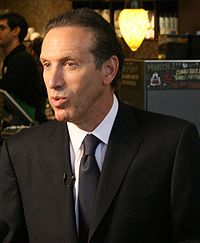
Howard Schultz: Chairmain, CEO, and President of Starbucks
Howard Schultz, Chairman, President, and CEO of Starbucks, who won an Entrepreneur of the Year award in 1993, spoke about his experience leading Starbucks through the economic crisis. As Starbucks began going through hard times, Schultz, who had given up the CEO role in 2001 (while remaining Chariman), decided it was time to take back the CEO responsibilities himself in early 2008.
Why? He was worried that the distinct culture, mission, and values that had brought the company great success were eroding.
According to Schultz, he came back into an operational role because he felt that the way out of crisis was not a simple change in business strategy, but instead– in his words– “love and nurturing.” His key to turning things around was revitalizing the investment in his people, recommitting to the core purpose of the organization and providing employees with hope and inspiration.
He says the transformation of Starbucks since this revitalization has been key to a tremendous amount of new innovation happening inside the company. People have even commented to him that it reminds them of what the early days at Starbucks must have been like.
Schultz took 10,000 of his best people and brought them together in New Orleans in late 2008 for a leadership conference where they spent 50,000 volunteer hours helping communities re-build after Hurricane Katrina. Below is a documentary that was filmed about this event.
Jim Whitehurst: 5 tips for competing in the 21st century
I spent two days this week at the Coach K Leadership Conference at Duke. It’s always good to get above the trees for a few days, and this experience was exactly that kind of opportunity. Jonathan Opp did a nice summary post on the conference here and you can see the live Twitter stream here.

Jim Whitehurst on stage at the Coach K leadership conference (photo by Jonathan Opp)
On Wednesday, Red Hat CEO Jim Whitehurst gave a keynote entitled “Competing as a 21st Century Enterprise Among 20th Century Giants.” Jim comes at this subject from a pretty unique vantage point: he is probably one of the few people in the world who has run both a 20th century company (Delta Airlines, as COO) and a 21st century company (that would be us, Red Hat).
In his presentation, Jim covered some of the things he has learned in moving from the command and control, military-inspired corporate environment of Delta (which is pretty similar to the structure of many of the other great 20th century companies) to the open source-inspired corporate structure here at Red Hat (if you want to learn more about Red Hat and the open source way, here and here and here and here are some posts that will help). In particular, Jim gave five tips that will help your company compete better in the 21st century world– I’ve summarized them below:
Tom Sawyer, whitewashing fences, and building communities online
I spoke on a panel at GE today with Chris Brogan, author of the book Trust Agents (almost finished with it, more comments in a later post…).

Tom Sawyer sez everyone's fence gets whitewashed today, people!
After hearing Chris talk about building trust in online communities, it hit me that one of the biggest mistakes I’ve seen people make when trying to build communities online, even in the open source world, is that they think like Tom Sawyer.
Here’s how Wikipedia retells the story of Tom Sawyer and the fence:
After playing hooky from school on Friday and dirtying his clothes in a fight, Tom is made to whitewash the fence as punishment on Saturday. At first, Tom is disappointed by having to forfeit his day off. However, he soon cleverly persuades his friends to trade him small treasures for the privilege of doing his work.
When thinking about building communities online, are you thinking like Tom Sawyer? Why are you building a community in the first place? When it comes right down to it, do you really just want people to whitewash your fence for you and give you small treasures in return for the privilege?
If you are looking to ideas like open source or social media as simple means to get what you want for your company, it’s time to rethink your community strategy.
Whole Foods and the brand promise
Whole Foods is a clear example of a mission-driven company. Over the years, they’ve taken strong activist stances on a number of topics related to healthy living. In fact, they are one of the few big corporations that I’ve seen actually link to their values as a main navigation element on their homepage. You’ve probably also seen these same values posted in your local store. I think this is awesome.
 And personally, I love Whole Foods. My guess is, based on their corporate values, that their core customer leans to the left politically.
This week, in the Wall Street Journal, John Mackey, CEO of Whole Foods, wrote an editorial entitled The Whole Foods alternative to Obamacare.
I see the strategy… a few weeks ago, Whole Foods launched a campaign to help empower Americans to lead healthier lives. At the campaign launch, Mackey even said Whole Foods is going to reverse the 14 year trend toward having more pre-processed food in their stores. I’m sure this editorial was one piece of a larger campaign strategy. And certainly most people would agree that Americans could use a healthier diet.
In moving from talking about healthier food into talking about healthcare, Whole Foods has hit on a massively politicized issue. When your core customers lean to the left, and as a corporate leader you take a position to the right, you take a risk that people might start to question whether they really affiliate themselves with your brand promise.
Brand positioning tip #3: the brand mantra
In previous posts, we’ve covered three of the four elements of good brand positioning as I learned them from Dr. Kevin Keller, 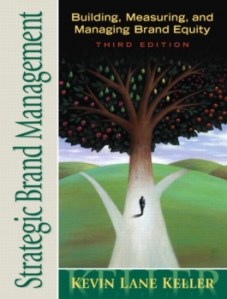 author of the classic branding textbook Strategic Brand Management:
- Points of difference: the things that make you different from your competition (and that your customers value)
- Points of parity: the places where you may be weaker than the competition and need to ensure you are “good enough” so you can still win on the merits of your points of difference
- Competitive frame of reference: the market or competitive landscape in which you are positioning yourself
Today we will be covering the 4th element of good brand positioning: the brand mantra.
What is a brand mantra?
A brand mantra is a 3-5 word shorthand encapsulation of your brand position. It is not an advertising slogan, and, in most cases, it won’t be something you use publicly.
According to Scott Bedbury, author of A New Brand World (one the of top 10 books behind Dark Matter Matters), the term brand mantra was coined during his time at Nike.
Hey, I Wrote a Book!

Available now in print and electronic versions.
 Dark Matter Matters