Dark Matter Matters
Chris Grams
TED talks about dark matter
In the physics/astronomy nerd category: The 2009 TED Global conference just wrapped up last week, and, on a fishing trip to see if they had posted any of the new talks yet (yes, I am a junkie), I found one from earlier this year with a short explanation by Brian Cox for why the Large Hadron Collider (the huge particle accelerator in Europe that we discussed here and here) failed. Thought I’d post it, even though his estimates for when it would be back online are kinda wrong.
And here’s a classic TED talk about dark matter and dark energy from last year’s conference by Patricia Burchat. I love this one.
Brand positioning tip #4: brand permission
In brand positioning tips 1-3, we discussed the 4 elements of good brand positioning: points of difference, points of parity, the competitive frame of reference, and the brand mantra. In this post, we are going to switch gears and talk about a subject called brand permission.
 When attempting to position your brand in a new competitive frame of reference (or, in non-marketing-ese, when you want to start selling stuff in a new market), consider whether your brand has earned permission to enter that market.
How do you know if you have permission? And who do you need permission from? Well, let’s look at a few examples.
Back in the early 1990s, Clorox underwent a failed experiment in extending the Clorox brand into detergent. There is a nice short writeup of it here. Why did the detergent product fail?
An open letter to Seth Godin
Dear Seth,
I just finished reading your new book Tribes. Normally when I read a book that relates to the Dark Matter Matters subjects (and Tribes talks about leadership and community and all kinds of good stuff), I write a review and post it here. I’m not going to do that this time. I think the reviews on Amazon pretty well cover it, so I’ll just point people there.
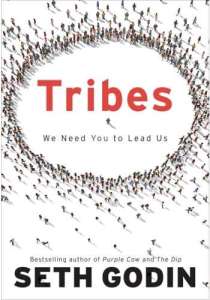 Seth, I have something a bit more personal I’d like to discuss with you. If I may be so bold.
I’ve read most of your books over the years, liars, and purple cows, and dips and whatnot, and I’ve got to tell you, I think you are one smart dude. I’ve learned a lot from you.
I thought the alternative MBA program you just finished was a stroke of genius. I was totally jealous– that would have been a great way to spend six months.
But, honestly, I always get this weird, hollow feeling after reading a book of yours. I couldn’t quite put my finger on it until I finished this one.
OK, let me just spit it out. I think your books can be kind of superficial and tend to preach to the choir a lot.
There. I said it. I’m sorry. I’m not trying to be a hater.
You even call out haters in this book. Said that you shouldn’t let people like that get you down. So please don’t get down, like I said, I really respect your work, it’s just I think you might be limiting your audience. You could be bigger.
So in the hope that I’m being a heretic (in the way you talk about in the book), rather than a hater, I’d humbly suggest some constructive ideas.
Seth, I’d like you to write a book that will do more than rally the tribe that thinks like you. I think you have a book in you that will educate those that don’t think like you. They need your help.
Brand positioning tip #3: the brand mantra
In previous posts, we’ve covered three of the four elements of good brand positioning as I learned them from Dr. Kevin Keller, 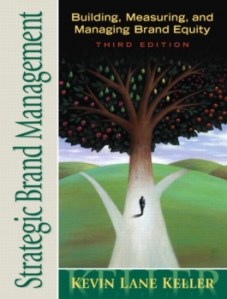 author of the classic branding textbook Strategic Brand Management:
- Points of difference: the things that make you different from your competition (and that your customers value)
- Points of parity: the places where you may be weaker than the competition and need to ensure you are “good enough” so you can still win on the merits of your points of difference
- Competitive frame of reference: the market or competitive landscape in which you are positioning yourself
Today we will be covering the 4th element of good brand positioning: the brand mantra.
What is a brand mantra?
A brand mantra is a 3-5 word shorthand encapsulation of your brand position. It is not an advertising slogan, and, in most cases, it won’t be something you use publicly.
According to Scott Bedbury, author of A New Brand World (one the of top 10 books behind Dark Matter Matters), the term brand mantra was coined during his time at Nike.
On July 19, 1999, I started at Red Hat
Ten years ago today, I showed up for my first day of work at Red Hat.

A pretty typical view from the Red Hat global HQ circa 1999. this picture appeared in Linux Magazine.
The office was an ugly one-story building in the back of an office park in Durham, NC, a far cry from the monstrous IBM campus I had just left. No longer would I be walking 10 minutes through a parking lot to get to my car, instead we were only a few steps from the front door, which was kind of a big deal for me at the time.
I was 27 years old, and ready to change the world.
At the time, this building was both the only office and the global headquarters for Red Hat, although this would change quickly as we opened offices in Asia and Europe over the next few months. There were about 125 or so people working for the whole company. In the marketing group that I joined, I think there were eight of us, and my first boss was Red Hat employee #1, Lisa Sullivan, who now runs two independent bookstores in Vermont. She had started working for Bob Young in Connecticut, before he joined up with Marc Ewing and moved the company down to North Carolina.
At the time, Marc Ewing and Bob Young still roamed the halls, in fact, Marc sat just a few cubes over from me next to Bascha Harris, who still works with me at Red Hat today. Marc tended to leave his empty drink cans stacked on his desk for weeks, so sometime swarms of fruit flies would descend on my desk after gorging on his leftovers. I’m not sure Marc even knew who I was. To Red Hat folks, I was just another guy coming in from a big company, itching to ruin everything.
The interview process was tough. I distinctly remember being interviewed over the phone by Matthew Szulik. He was Red Hat’s president at the time, and had only been with the company about a year. I still remember him asking me one of his famous interview questions, something like “How will you know if your life has been successful?” I have no idea how I answered that, but I’d really like to hear my answer now.
When good companies go bad
A few weeks ago I finished the new Jim Collins book How the Mighty Fall and Why Some Companies Never Give In. If you read this blog much, you’re probably sick of me prattling on about how much I love Jim Collins’ work (here, here, and here). Over the years at Red Hat, we’ve based many projects related to the values, mission, and other corporate-level structural thinking on ideas we got from him.
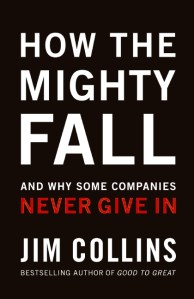 Well, it’s been almost eight years since Collins wrote his last full-length book, Good to Great (which ranked number one on my list of the top ten books behind Dark Matter Matters). How the Mighty Fall is a short book, and in it, Collins is clearly a bit on the defensive about his previous work. The issue? In the economic meltdown last year, some of his Built to Last companies didn’t last, and some of his Good to Great companies are back to good… or gone.
Collins explains it this way:
…the principles in Good to Great were derived primarily from studying specific periods in history when the good-to-great companies showed a substantial transformation into an era of superior performance that lasted fifteen years. The research did not attempt to predict which companies would remain great after their fifteen-year run. Indeed, as this work shows, even the mightiest of companies can self-destruct.
…I’ve come to see institutional decline like a staged disease: harder to detect but easier to cure in the earlier stages, easier to detect but harder to cure in the later stages. An institution can look strong on the outside but already be sick in the inside, dangerously on the cusp of a precipitous fall.
So this book is Collins’ attempt to discover why exactly some very good companies went oh so very bad. If Good to Great was Star Wars, this book is The Empire Strikes Back— a long, hard look into the dark side (even the cover is black).
Collins did extensive research using an interesting approach. He studied these companies, not as history has judged them, but based on what the company was saying, what the press was saying, what financial analysts were saying during the time period being studied– before we knew the outcome. And all of the research was done in historical order, almost like he was following the companies through time.
The results of the research play out like a Greek tragedy. He identified 5 stages of decline in the companies that had gone from great to… not so great:
Washington Monthly on healthcare reform and open source
There’s a powerful cover story in the July/August issue of Washington Monthly entitled Code Red: How software companies could screw up Obama’s health care reform (Thanks to Maria Moore for the link).
 In the article, Phillip Longman describes a few horrifying experiences hospitals have had trying to “go digital” using proprietary software. Here’s a particularly scary quote:
According to a study conducted by [the Children’s Hospital of Pittsburgh] and published in the journal Pediatrics, mortality rates for one vulnerable patient population—those brought by emergency transport from other facilities—more than doubled, from 2.8 percent before the installation to almost 6.6 percent afterward.
In the context of Dark Matter Matters, this story is interesting because it shows how an open source, community-driven effort led by the Veterans Health Administration has been able to not only innovate faster than its proprietary competitors, but also more deeply involve the end customers– the doctors, nurses, and other folks who actually use the software– in development of tools that work in real world situations.
Red Hat culture tip: default to open
After 10 years at Red Hat, I’ll admit I am a little bit out of touch with what the corporate world looks like everywhere else. But after a recent conversation with someone out there in the non-Red Hat universe, I thought I’d pass on a quick tip they found helpful on how to create a more collaborative culture in your organization.

Tom Petty sez you should go "into the great wide open..."
The tip is simple. Default to open. Everywhere.
What does this mean? It means rather than starting from a point where you choose what to share, you start from a point where you chose what not to share.
You begin sharing by default.
A quick example. Our group was lucky enough to (thanks to our talented global facilities director, Craig Youst) have the opportunity to help design our own office space. As part of the space design, we determined that we wanted no offices– everyone would be in a large, open collaborative space.
Everyone had the same sized cubes, and it didn’t matter how much of a muckety-muck you were or weren’t. If you wanted to have a private conversation, the space design included a series of private alcoves, where you could go talk with your doctor, or yell at your wife, or whatever you didn’t want to do in public. But the key is that you had to actively decide when placing a call, do I want to take this in private? Which is counter than the old-skool office design where you had an office with a door, and all conversations were private by default.
Brand positioning tip #2: the competitive frame of reference
In Brand Positioning Tip #1, we covered 2 of the 4 key elements of successful brand positioning done the way Dr. Kevin Keller taught me: points of parity and points of difference. Today, I’d like to highlight the third key element of good brand positioning– understanding your competitive frame of reference.
Competitive frame of reference is a fancy way of saying “the market you compete in.”
This sounds pretty simple, huh? It can be… If you run a furniture store, your competitive frame of reference would probably be the furniture market. If you run a tattoo parlor, your competitive frame of reference would probably be the tattoo market.
Those are pretty cut and dry cases. But have you ever stopped and wondered to yourself, “exactly what market am I competing in?” and realized that you are really competing in a market that is not initially obvious? Or that you are actually competing in multiple markets? If either of these situations are true, you may discover you need to create points of parity and points of difference for each market where you compete.
Here is an common example of a less-than-obvious competitive frame of reference.
What market do you think Starbucks is in? The coffee market? Maybe. In the coffee market, Starbucks competes with grocery stores, fast food restaurants, other coffee shops, and home brewers. Tough market… they aren’t competitive in the coffee market on price, there are probably options that (arguably) taste better, maybe have shorter lines. It’s hard to believe that Starbucks would have grown as big as they are by simply competing in the existing coffee market.
New socialism? Naw, it’s the new individualism.
My friend Jeff Mackanic pointed me to this article from last month’s Wired Magazine where Kevin Kelly makes the assertion that there is a “new socialism” emerging in the form of large-scale collaboration projects online. He discusses contributions to Wikipedia, Flickr, even Red Hat’s own Fedora as examples of village-sized or greater online collective work.
In the context of my recent post regarding what Ayn Rand would think of open source, I think Kevin makes a leap where I might not follow him.The clue is right in the article:
…the leaders of the new socialism are extremely pragmatic. A survey of 2,784 open source developers explored their motivations. The most common was “to learn and develop new skills.” That’s practical. One academic put it this way (paraphrasing): The major reason for working on free stuff is to improve my own damn software. Basically, overt politics is not practical enough.
Where Kevin Kelly reaches the conclusion that contributors working together to “improve [their] own damn software” is a new form of socialism in action, I might take the view instead that this is a new form of individualism.
A form of individualism where people are free to pursue their own self interests, yet do so in such a way that they are still in harmony with those around them. The goal of open source developers is individual pursuit, as the paragraph above from the article makes clear… yet a byproduct of these individual pursuits is a collective good: better software, a better enyclopedia, etc.
If it was socialism, the collective good would be the end goal of everyone. But ultimately, the open source model is based on the individual working for the good of himself in harmony with others, not on being a mindless cog in a much bigger wheel.
But I’m no philosophy expert, what do you think?
Hey, I Wrote a Book!

Available now in print and electronic versions.
 Dark Matter Matters