Dark Matter Matters
Red Hat
Sharing your brand story (and here’s ours)
The most compelling brands in the world tell compelling stories. Whether the brand is Nike (the Greek winged goddess of victory was named Nike, and it all rolls from there) or IBM (Thomas Watson and THINK) or [your favorite brand here], the most interesting brands have great mythologies built up over time. The brand story is deeply ingrained in their actions, voice, look, and culture.
It’s been almost eight years since we created the first Red Hat Brand Book. The original book was an attempt to capture the essence of our Red Hat story, to explain what Red Hat believes, where we came from, and why we do what we do.
It had a secondary mission as an early brand usage guide, explaining what Red Hat should look and sound like at a time when the company was expanding rapidly around the world and brand consistency was becoming harder to achieve.
When most companies create this sort of document, they call it a “Brand Standards Manual”, or something like that. But we were young, foolish, and drunk on the meritocracy of open source, so in the first version of the Brand Book, we emblazoned the words “This is not a manual” on the front cover.
Why? We wanted to be very clear this book was the starting point for an ongoing conversation about what the Red Hat brand stood for, looked like, and sounded like, rather than a prescriptive “Thou shalt not…” kind of standards guide.
I hate brand standards that sound like legal documents. I’ve always felt like the role of our group was to educate and inspire, not to police, and we tried to create a document that embodied that spirit.
This year we launched the biggest update yet to the Brand Book. In doing so, we actually split it into two projects:
Matthew Szulik and the Red Hat vision
The BBC conducted a great interview with Red Hat Chairman Matthew Szulik while he was attending the Ernst & Young World Entrepreneur of the Year awards recently (representing the United States as our winner). You can listen to it here.
This interview is a wonderful reminder of the powerful impact of a corporate vision that extends beyond just making money. And a great reminder for me of how lucky I have been to learn about leadership, community, culture, and brand from the 2008 United States Entrepreneur of the Year.
If you are interested in learning more about Matthew Szulik, his vision, and how it evolved, here is a wonderful oral history of his life that was commissioned a few years ago.
On July 19, 1999, I started at Red Hat
Ten years ago today, I showed up for my first day of work at Red Hat.

A pretty typical view from the Red Hat global HQ circa 1999. this picture appeared in Linux Magazine.
The office was an ugly one-story building in the back of an office park in Durham, NC, a far cry from the monstrous IBM campus I had just left. No longer would I be walking 10 minutes through a parking lot to get to my car, instead we were only a few steps from the front door, which was kind of a big deal for me at the time.
I was 27 years old, and ready to change the world.
At the time, this building was both the only office and the global headquarters for Red Hat, although this would change quickly as we opened offices in Asia and Europe over the next few months. There were about 125 or so people working for the whole company. In the marketing group that I joined, I think there were eight of us, and my first boss was Red Hat employee #1, Lisa Sullivan, who now runs two independent bookstores in Vermont. She had started working for Bob Young in Connecticut, before he joined up with Marc Ewing and moved the company down to North Carolina.
At the time, Marc Ewing and Bob Young still roamed the halls, in fact, Marc sat just a few cubes over from me next to Bascha Harris, who still works with me at Red Hat today. Marc tended to leave his empty drink cans stacked on his desk for weeks, so sometime swarms of fruit flies would descend on my desk after gorging on his leftovers. I’m not sure Marc even knew who I was. To Red Hat folks, I was just another guy coming in from a big company, itching to ruin everything.
The interview process was tough. I distinctly remember being interviewed over the phone by Matthew Szulik. He was Red Hat’s president at the time, and had only been with the company about a year. I still remember him asking me one of his famous interview questions, something like “How will you know if your life has been successful?” I have no idea how I answered that, but I’d really like to hear my answer now.
Washington Monthly on healthcare reform and open source
There’s a powerful cover story in the July/August issue of Washington Monthly entitled Code Red: How software companies could screw up Obama’s health care reform (Thanks to Maria Moore for the link).
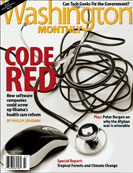 In the article, Phillip Longman describes a few horrifying experiences hospitals have had trying to “go digital” using proprietary software. Here’s a particularly scary quote:
According to a study conducted by [the Children’s Hospital of Pittsburgh] and published in the journal Pediatrics, mortality rates for one vulnerable patient population—those brought by emergency transport from other facilities—more than doubled, from 2.8 percent before the installation to almost 6.6 percent afterward.
In the context of Dark Matter Matters, this story is interesting because it shows how an open source, community-driven effort led by the Veterans Health Administration has been able to not only innovate faster than its proprietary competitors, but also more deeply involve the end customers– the doctors, nurses, and other folks who actually use the software– in development of tools that work in real world situations.
Red Hat culture tip: default to open
After 10 years at Red Hat, I’ll admit I am a little bit out of touch with what the corporate world looks like everywhere else. But after a recent conversation with someone out there in the non-Red Hat universe, I thought I’d pass on a quick tip they found helpful on how to create a more collaborative culture in your organization.

Tom Petty sez you should go "into the great wide open..."
The tip is simple. Default to open. Everywhere.
What does this mean? It means rather than starting from a point where you choose what to share, you start from a point where you chose what not to share.
You begin sharing by default.
A quick example. Our group was lucky enough to (thanks to our talented global facilities director, Craig Youst) have the opportunity to help design our own office space. As part of the space design, we determined that we wanted no offices– everyone would be in a large, open collaborative space.
Everyone had the same sized cubes, and it didn’t matter how much of a muckety-muck you were or weren’t. If you wanted to have a private conversation, the space design included a series of private alcoves, where you could go talk with your doctor, or yell at your wife, or whatever you didn’t want to do in public. But the key is that you had to actively decide when placing a call, do I want to take this in private? Which is counter than the old-skool office design where you had an office with a door, and all conversations were private by default.
Brand positioning tip #2: the competitive frame of reference
In Brand Positioning Tip #1, we covered 2 of the 4 key elements of successful brand positioning done the way Dr. Kevin Keller taught me: points of parity and points of difference. Today, I’d like to highlight the third key element of good brand positioning– understanding your competitive frame of reference.
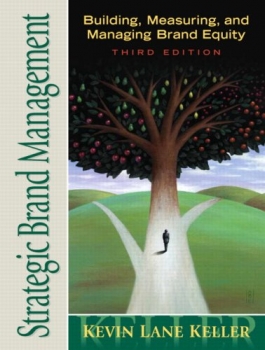
Competitive frame of reference is a fancy way of saying “the market you compete in.”
This sounds pretty simple, huh? It can be… If you run a furniture store, your competitive frame of reference would probably be the furniture market. If you run a tattoo parlor, your competitive frame of reference would probably be the tattoo market.
Those are pretty cut and dry cases. But have you ever stopped and wondered to yourself, “exactly what market am I competing in?” and realized that you are really competing in a market that is not initially obvious? Or that you are actually competing in multiple markets? If either of these situations are true, you may discover you need to create points of parity and points of difference for each market where you compete.
Here is an common example of a less-than-obvious competitive frame of reference.
What market do you think Starbucks is in? The coffee market? Maybe. In the coffee market, Starbucks competes with grocery stores, fast food restaurants, other coffee shops, and home brewers. Tough market… they aren’t competitive in the coffee market on price, there are probably options that (arguably) taste better, maybe have shorter lines. It’s hard to believe that Starbucks would have grown as big as they are by simply competing in the existing coffee market.
What would Ayn Rand think of open source? You can vote!
At the beach over the weekend, I read Anthem by Ayn Rand. Now before you write me off as the kind of guy that would go around telling people he reads Ayn Rand for fun, let me just say in my defense that this is really the first full Ayn Rand book I have read.  And it is only 105 pages long. Having read this, I’d totally read the CliffsNotes for The Fountainhead or Atlas Shrugged (which is like 1200 pages long).
Rand originally titled Anthem as “Ego” and you can definitely tell why. It is about a futuristic world where people are kinda back in the dark ages technologically-speaking, and live in a collective where people have numbers rather than names, are assigned jobs for life, and have forgotten the word “I” (yes, totally annoying… in the first ten chapters, the main character uses the royal “we” to refer to himself).
It seems like Ayn Rand has been back in the news lately, and I’ve seen her name bandied about in political arguments quite a bit, especially regarding healthcare reform. So it made me think, if Ayn Rand’s core philosophy was about maintaining the supremacy of the individual, what she calls “rational self-interest,” and she rejected the idea that the collective good should be put before the good of the individual, what would she think about the open source movement?
After all, I used to remember seeing stories with proprietary companies referring to open source as socialism all the time, although it doesn’t seem to happen as much these days. More and more of the biggest companies are embracing open source software and the concept of open source is more mainstream than ever.
So surely Ayn Rand would hate open source, right? Not so fast. Here are two good reasons why Ayn Rand might totally dig open source:
Summer reading list for Dark Matter Matters
Ah, vacation… the time when the work shuts down for a few days and the Dark Matter Matters blog comes out of hibernation… 3 posts in 3 days!

A few months ago I wrote a post where I highlighted the top ten books behind Dark Matter Matters. In that post I promised to create a list of the books that didn’t make the top 10 cut, but are still pretty awesome.
So here, to celebrate the long holiday weekend, are some more books that have inspired Dark Matter Matters.
Books about how large-scale collaboration is pretty much the deal:
Wikinomics by Don Tapscott and Anthony Williams
The Wisdom of Crowds by James Surowiecki
The Starfish and the Spider by Ori Braffman and Rod Beckstrom
In the open source world, there’s a legendary quote attributed to Linus Torvalds (yes, he is the guy that Linux is named after) “Given enough eyeballs, all bugs are shallow.” The first two of these books are the extended dance remix of this quote. Each has a unique take, but both show how mass collaboration is changing everything about our society and the way we solve problems. The Starfish and the Spider is a interesting look at leaderless organizations and is a nice book for anyone trying to understand how the open source movement (and other leaderless organizations) work, and why open source is so hard to compete against. It is also a nice complement to the Mintzberg article I wrote about in my previous post.
Rebuilding companies as communities

The brilliant Henry Mintzberg. I've got to meet this guy some day.
Holy smokes, Henry Mintzberg is at it again! The guy who predicted the economic collapse in 2006 (why is he not more famous, I don’t get it?) has an article in the July/August issue of the Harvard Business Review suggesting that the cultural framework of the corporation is completely broken.
And, according to Mintzberg, the way to fix it is not by thinking like a corporation, but instead by thinking like a community. From the article:
Beneath the current economic crisis lies another crisis of far greater proportions: the depreciation in companies of community– people’s sense of belonging to and caring for something larger than themselves. Decades of short-term management, in the United States especially, have inflated the importance of CEOs and reduced others in the corporation to fungible commodities…
And it’s is a two way street… When a corporation treats its employees like simple assets to be hired and fired as the share price rises or falls, the employees treat the corporation like… a corporation.
The end result? Disengaged employees who don’t care about the business, and the business (and the shareholders) suffer for it. So for heaven’s sake, Henry, tell us how to fix it!
The role of film at Red Hat
Yesterday, Red Hat launched a new series of short films called Red Hat Stories. These films are a key element in our effort to document “the Red Hat way” of doing things. We’ve started with sixteen films covering everything from an overview of what makes Red Hat useful, to our technology leadership, even a set about our perspective on how to liberate innovation. The piece below is a short, sweet distillation of the Red Hat way, and it speaks for itself.
I use the word “film” rather than video on purpose because it better captures the spirit of what we are trying to do with digital media at Red Hat. Films are what you make when you are captuing stories. Videos are what you make when you are selling your stuff. So we aspire to film, certainly with our most strategic work, but sometimes settle for video when the project demands it.
Red Hat’s first attempt at using film as a medium for storytelling was Truth Happens, which we created almost seven years ago. I’ve told that story in an earlier blog post. Since Truth Happens, we’ve expanded our efforts to use film, video, and other digital media tools in many ways.
Hey, I Wrote a Book!

Available now in print and electronic versions.
 Dark Matter Matters