Dark Matter Matters
Red Hat
Jim Whitehurst: 20th century companies already hiring 21st century employees
Last night, Red Hat President and CEO Jim Whitehurst gave a talk to a group made up of mostly students and faculty at the NC State School of Engineering. Nice writeup of it in the student newspaper here. His ideas were very timely for me; just the other day, I wrote a post with some tips for companies with 20th century cultures trying to make the move into the 21st century.

Your future employee sez: I'm going to need a bit more collaboration and meritocracy up in here! (photo by D Sharon Pruitt)
Jim Whitehurst is in a rather unique position because he has managed both an icon of the 20th century corporation (Delta Airlines) and what we’d like to think is a good example of the 21st century corporation here at Red Hat.
Because of his experiences, Jim is able to clearly see and articulate the differences between the old model of corporate culture, based on classic Sloan-esque management principles, and the emerging model, based in many ways on the power of participation broadly (and in our case, the open source way specifically).
One very simple point Jim made that really struck me: Companies with 20th century business models need to realize that they are already hiring 21st century employees.
People coming out of school today have grown up in an age where the ability to participate and share broadly is all they’ve known. These folks have grown up with email accounts, the Internet, Facebook, and all of the other trappings of a connected world.
So when they graduate from school and take jobs working in old-style corporate cultures, where progressive principles like transparency, collaboration, and meritocracy lose out to the old world of control, power, and hierarchy, what happens?
Trying to change a 20th century corporate culture? Where should you start?
 When I talk about the culture that we’ve built at Red Hat over the years around the principles of the open source way, one of the most popular questions I get is something along these lines.
That’s great and all, Chris. But Red Hat built its culture from scratch. My company culture has been the same for over 50 years. Can you change a deeply entrenched 20th century culture?
It’s a great question. Clearly there is a big advantage to being able to organically build a corporate culture from scratch. But, with support from the top levels of management, it is not impossible to change an entrenched culture, too.
Where do you start? Here are three tips:
Brand naming strategy: branded house or house of brands?
At Red Hat, I often get questions about how we name stuff. It is usually not just idle curiosity, mind you, in most cases someone has a new program or product and would like to call it something like Supersexyshinyfoo. Our team has to play the bad guy role and explain that we don’t usually create new brands like that at Red Hat.

Cow sez: Dude. Do I really need another brand?
The response is typically something like “Let me get this straight… You guys think long, boring names like Red Hat Enterprise Linux, Red Hat Enterprise Virtualization, and JBoss Enterprise Application Platform are better than Supersexyshinyfoo?”
My answer? We already have a Supersexyshiny… it’s the Red Hat brand.
We’ve spent years building the Red Hat brand into something that people associate with (according to our surveys) value, trust, openness, choice, collaboration, and a bunch of other neat things. Studies have shown that Red Hat brand karma is pretty positive. And the logo looks great on a t-shirt. Our brand is one of our most valuable assets.
This is why most Red Hat products have very descriptive (some would say boring…) names. The equation probably looks something like this:
(Supersexyshiny + Foo) = (Red Hat + descriptive name)
This brand strategy is often referred to as a “branded house” strategy. Take one strong brand, plow all of your brand meaning into it, while differentiating each product with descriptors instead of brand names.
These days, many automobile manufacturers do things this way. Remember when Acura used to have the Acura Integra and the Acura Legend? Honda simplified the branding strategy by moving to RL, TL, TSX, etc. as descriptors for their cars, pointing all of the brand energy back at the Acura brand. Many other auto manufacturers follow similar principles.
Tom Sawyer, whitewashing fences, and building communities online
I spoke on a panel at GE today with Chris Brogan, author of the book Trust Agents (almost finished with it, more comments in a later post…).

Tom Sawyer sez everyone's fence gets whitewashed today, people!
After hearing Chris talk about building trust in online communities, it hit me that one of the biggest mistakes I’ve seen people make when trying to build communities online, even in the open source world, is that they think like Tom Sawyer.
Here’s how Wikipedia retells the story of Tom Sawyer and the fence:
After playing hooky from school on Friday and dirtying his clothes in a fight, Tom is made to whitewash the fence as punishment on Saturday. At first, Tom is disappointed by having to forfeit his day off. However, he soon cleverly persuades his friends to trade him small treasures for the privilege of doing his work.
When thinking about building communities online, are you thinking like Tom Sawyer? Why are you building a community in the first place? When it comes right down to it, do you really just want people to whitewash your fence for you and give you small treasures in return for the privilege?
If you are looking to ideas like open source or social media as simple means to get what you want for your company, it’s time to rethink your community strategy.
Coming soon…three new design thinking books for your bookshelf
At Red Hat, we’ve been using the design thinking methodology as a catalyst for innovation since David Burney introduced us to the concept about five years ago. Here’s an interview with Burney from 2006 on the subject that appeared in Red Hat Magazine.
The design thinking conversation has been getting more and more mainstream, especially since BusinessWeek editor Bruce Nussbaum became one of it’s greatest advocates. Here’s a starting point for all of the BusinessWeek coverage of the past few years. So it comes as no surprise that the book publishing industry is now on the case, with three design thinking books coming out this fall.
 The one I’m most looking forward to is Roger Martin’s The Design of Business: Why Design Thinking is the Next Competitive Advantage, to be published on November 9. Dark Matter Matters has discussed Roger Martin‘s work extensively here, here, and here, and I think he is one of the most relevant minds in business today. Can’t wait to see where he is taking this book, here’s what the preview copy says:
To innovate and win, companies need design thinking. This form of thinking is rooted in how knowledge advances from one stage to another-from mystery (something we can’t explain) to heuristic (a rule of thumb that guides us toward solution) to algorithm (a predictable formula for producing an answer) to code (when the formula becomes so predictable it can be fully automated). As knowledge advances across the stages, productivity grows and costs drop-creating massive value for companies.
Martin shows how leading companies such as Procter & Gamble, Cirque du Soleil, RIM, and others use design thinking to push knowledge through the stages in ways that produce breakthrough innovations and competitive advantage.
 Tim Brown, CEO of IDEO (the company often credited with defining design thinking) also has a design thinking book coming out this fall. His book is entitled Change by Design: How Design Thinking Transforms Organizations and Inspires Innovation and is billed this way:
This is not a book by designers for designers; this is a blueprint for creative leaders seeking to infuse design thinking—an approach for creative problem solving—into all facets of their organizations, products, or services to discover new alternatives for business and society as a whole.
Tim Brown’s book comes out on September 29.
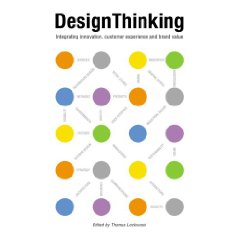 Finally, Thomas Lockwood, President of the Design Management Institute has a book called Design Thinking: Integrating Innovation, Customer Experience, and Brand Value coming out on November 10. It sounds like he is serving as an editor for a bunch of experts writing on the subject. From the preview copy:
Featuring 30 articles, written by industry experts, that show how to build a solid brand foundation, solve problems with simplified thinking, anticipate and capitalize on trends, figure out what consumers want before they do, and align mission, vision, and strategy with a corporate brand, this is a must-have reference for anyone wanting to increase their businesses productivity.
I’ll bring the reviews as soon as the books come out!
Do you have 10,000 hours in yet? The 21st century is waiting…

Baby Mozart sez I got my 10,000 hours of practice in before I was five years old, suckers!
Finally got around to reading Malcolm Gladwell’s new book Outliers. I’m late to the game on this one, so I’ll skip the full review and instead point to some good summaries about the book here, here, and here. I have other fun stuff I want to cover today.
For me, this book was his best yet. Gladwell’s gift is he is an amazing storyteller, and in this book he once again takes semi-boring academic research and makes it deeply relevant and interesting by crafting a beautiful story around it.
Here’s a short synopsis of Outliers. I decided to write it in the form of a limerick. I have no idea why.
Some folks become world-class Outliers,
Achieving success we can’t help but admire,
But smarts and ambition,
Aren’t the only pre-conditions,
Great timing and practice are required.
Basically, Gladwell is saying you can be the smartest guy on Earth and achieve nothing worth mentioning. But incredible, world-class success (think Bill Gates, Mozart, the Beatles) is a mashup of being born at the right time in the right place to the right people with the right genetic makeup while having the right things occur to you at exactly the right times in your life.
Oh, and you need to get in 10,000 hours of practice to become an expert at your craft.
This last concept really got to me. The idea that in order to become an expert in your field, you need to put in 10,000 hours of practice has been covered extensively. In fact there are two other books out describing the research behind this assertion, The Talent Code by Daniel Coyle and Talent is Overrated by Geoff Colvin.
Hearing the Bill Gates and Steve Jobs stories of perfect timing and early practice in Gladwell’s book started me thinking about a few things.
Save us, General Zinni! Teach us corporate folks some 21st century leadership skills
I happened to catch General Tony Zinni on The Daily Show a few weeks ago. This was the first time I’d seen him talk, and I found him to be an incredibly creative, thoughtful man. So this weekend, I sat down and read his recently published leadership book Leading the Charge: Leadership Lessons from the Battlefield to the Boardroom. If you want to learn more about General Zinni’s long list of accomplishments, both inside and outside the military, there is a really good Wikipedia profile of him here.
 In this book, General Zinni describes an introspective, creative, and rapidly changing American military mindset. After reading, I’m convinced the subtitle should have been something like “Lessons from the New Military for a Corporate America Totally Blowing It.”
This book provides a crisp analysis of the failures of the 20th century leadership model still prevalent in most businesses today. It is an indictment of the post-economic-meltdown-state of American business, which he believes was caused in large part by a systemic failure of this traditional leadership model.
Like a true man of action, General Zinni brings his own ideas and experience of leadership methods that work in the high-pressure, high-risk world of the military to the table. He provides a vision for how we can fix what is broken, and shows what the leadership model for the 21st century organization could be.
Army training the open source way
Very cool article in the New York Times yesterday entitled Care to Write Army Doctrine? With an ID, Log On.

Pvt. Winger sez let's open source ARMY TRAINING, SIR!
The gist is the Army is running an experiment in mass participation, allowing any member of the Army, from five star general to latrine specialist, to edit a test group of seven Army field manuals using an online wiki. From the article:
“For a couple hundred years, the Army has been writing doctrine in a particular way, and for a couple months, we have been doing it online in this wiki,” said Col. Charles J. Burnett, the director of the Army’s Battle Command Knowledge System. “The only ones who could write doctrine were the select few. Now, imagine the challenge in accepting that anybody can go on the wiki and make a change — that is a big challenge, culturally.”
It sounds like the reaction within the Army has been all across the map, some viewing it as an extremely progressive step forward to others thinking the idea is totally crazy. But top Army leadership appears to be behind the idea. Again from the article:
The idea has support at the highest ranks. Lt. Gen. William B. Caldwell, the commander of the Combined Arms Center at Fort Leavenworth, Kan., wrote on the center’s blog on July 1, that “by embracing technology, the Army can save money, break down barriers, streamline processes and build a bright future.”
Here at Dark Matter Matters, we give this idea a huge +1. The army is employing some of the same principles we open source folks have employed to great success. A few key parts of the open source way applied here:
Red Hat brand tip: esse quam videri
A long time ago, a smart North Carolina native mentioned to me that the official NC state motto was the Latin phrase “esse quam videri,” which translates as “to be rather than to seem to be.” Yeah, I didn’t know states had mottoes either. Turns out a lot of them do.

Cicero sez take my advice and be rather than seem. It's Latin, which makes it right, people.
I was struck by this phrase. As Red Hat has grown from North Carolina roots into an international company with offices around the world, we’ve adopted this one little piece of North Carolina-ness as an unofficial litmus test for the Red Hat brand voice as well.
Esse quam videri first appeared in the Cicero essay On Friendship, but a similar concept can actually be traced back to the Greek playwright Aeschylus. His line, which later appeared in Plato’s The Republic, was “His resolve is not to seem the best but in fact to be the best.” You can find more on the history of the phrase here.
Esse quam videri inspires authenticity. When Red Hat is communicating at our best, we use esse quam videri as the muse of simple, honest talk; conversation that doesn’t hide behind the foreign languages of marketing, law, or business.
Sometimes it inspires us to not communicate at all, to simply do instead. When we are not communicating well, we are not listening to our muse.
In a fight between Chris Anderson and Malcolm Gladwell, I have five bucks on Chris
I just finished reading the new book Free by Chris Anderson, which I read on my sweet new Kindle for the low, low price of… you guessed it… free (the Kindle edition was free for the first month, but you missed it, $9.95 now).
 For those of you who aren’t familiar, Chris Anderson has been with Wired Magazine since 2001, and is currently the Wired Editor in Chief (a fact that I copied directly from Wikipedia, something he has also been accused of doing).
I’d consider Chris a member of the pantheon of Folks Who Can Decently Explain What the Heck Is Happening On This Planet Right Now, alongside Thomas Friedman, Malcolm Gladwell, and Michael Pollan, among others.
However, I have only recently forgiven Chris for his long tail concept that unleashed hordes of marketing droids blathering on for hours about the long tail of this and the long tail of that a few years back. I’m not saying he wasn’t right, it was a great book. But, dude, you have no idea what you put us through. Torture.
Here is my attempt to paraphrase the 300 pages of Free in two sentences:
The price of digital content is moving quickly toward free. So stop bitching about it and figure out a business model that allows you to make a decent living anyway.
It’s a brilliant book. And I’m not just saying that because I work for a company that figured out a way to build a profitable business model that plays well with free. As I was reading, I kept thinking how eloquently Chris was stating complex concepts that I’ve been living with at Red Hat for years, but had never been able to articulate (he even mentions us in the book three times, score!).
I also kept thinking what another great truthteller named Bob Dylan once said: “You don’t need a weatherman to know which way the way the wind blows.”
Or maybe you do. Turns out there are a lot of people out there who passionately disagree with Chris Anderson about the conclusions he draws in this book that I found rather obvious.
Hey, I Wrote a Book!

Available now in print and electronic versions.
 Dark Matter Matters