Dark Matter Matters
brand
I’m writing a book
For my first post of 2011, I thought I’d share some interesting news: I’m writing a book.
The title is The Ad-free Brand: Secrets to Successful Brand Positioning in a Digital World. It is intended to be a hands-on guide to help organizations of any size in any industry effectively position their brands in a what I’d call a post-advertising world.
I’m writing it not just for marketing/communications types, but for anyone who is interested in learning more about how to effectively position their brand using 21st century tools and strategies, whether the brand is a product, a website, a small business, a non-profit, a person, or a Fortune 500 company.
As those who’ve read my brand positioning tips know, I’m a bit of a positioning junkie. But my frustration has been that I haven’t found a really good resource that helps people manage and grow brands that can’t afford (or choose not to do) big fancy advertising campaigns. If you read through the classic texts like Positioning: The Battle for Your Mind by Jack Trout and Al Ries, they are filled with examples of executing positioning through advertisements, taglines, and marketing campaigns.
But as good as the positioning concepts themselves are, I’m not sure the advertising-driven execution of these concepts is as relevant in 2011 as it was in the 20th century. My goal with The Ad-free Brand is to teach people the timeless principles of good brand positioning, then show them how to apply them a new kind of way using the lessons I’ve learned from the open source world and elsewhere.
As some of you know, I spent the first part of my career in book publishing, first as a literary agent then as an editor. Writing a book is something I’ve always wanted to do, so I’m kind of excited, but also pretty nervous. Yikes!
The Ad-free Brand will be published by Pearson/Que sometime in Fall, 2011. I’ll keep you up to date on my progress along the way. Finally, I just want to say thanks for coming by and reading some of my posts this past year. If you notice me writing a few less original posts during the next few months, now you know why:)
Happy new year!
Does WikiLeaks damage the brand image of wikis?
Over the past few weeks, the world has been consuming the newest set of revelations via WikiLeaks. The uproar caused by the release of the first set of diplomatic cables from a batch of 251,000 in WikiLeaks’ possession is enough to take your breath away.
 A disclaimer: in this post it is not my intention to analyze the positive or negative consequences of the actions of the WikiLeaks organization—there is plenty of that coverage, just check your favorite news reader every five minutes or so to see the latest.
Instead, I want to explore the impact that the WikiLeaks brand name is having/will have on brands closely identifying with the word “wiki”, and analyze whether WikiLeaks will impact the acceptance of collaboration and transparency initiatives within corporations.
My feeling? These are potentially dangerous days for wikis, collaboration, and transparency in the corporate world.
What makes this case particularly interesting is that, according to Wikipedia (of course), as of this month the WikiLeaks website isn’t even based on a wiki anymore.
[Read more of this post on opensource.com]
Evaluating TEDx as a brand strategy
A big part of my day job is to help organizations with their brand positioning and strategy.
 So when I read the article in the New York Times this past Sunday about TEDx, the relatively new (and incredibly popular) offshoot of the legendary TED conference, I thought it might be a good opportunity to take a closer look. The issue?
Clearly TEDx has been a smart community-building strategy, but will it ultimately prove to be a smart brand strategy as well?
Let me take a few steps back. If you are not familiar with TED (seriously? have you been camping in Siberia?) you can learn more here.
The main TED conference is a place where smart people (with big $$ and a personal invite) go once a year to hear other smart people give short talks showcasing how smart they are. The rest of us poor, unconnected folks wait patiently for the nice TED people to release the TED talks one by one, teasing us like a painfully-slowly dripping faucet teases a man dying of thirst.
And that’s the way it worked. Until last year when, in June, TED announced a new program called TEDx that would allow anyone to organize their own TED conference anywhere in the world.
The New York Times article tells the story of what has happened with the TEDx program in a little over a year:
…there were 278 events last year in places as near as New Jersey and Florida, and as far as Estonia and China. There was TEDxKibera, held in one of Africa’s largest shantytowns in Nairobi, Kenya. And there was TEDxNASA, which had space-themed lectures.
Already this year there have been 531 TEDx events. Another nearly 750 are to take place this year and beyond.
Wow. Now that is community-driven innovation on a grand scale. From one event per year with a small number of people attending at a very high cost to almost two TED events per day, held around the world, and almost every event is free. All that in a little over a year.
I’d call that a smashing strategic success. A soon-to-be-classic community engagement story.
But if we look at the decision to create TEDx from a traditional brand or intellectual property point of view, would it also be viewed as a good strategy?
[Read the rest of this post on opensource.com]
Do you aspire to build a brand community or a community brand?
In my day job at New Kind, I spend quite a bit of my time working on brand-related assignments, particularly for organizations interested in community-based approaches to building their brands.
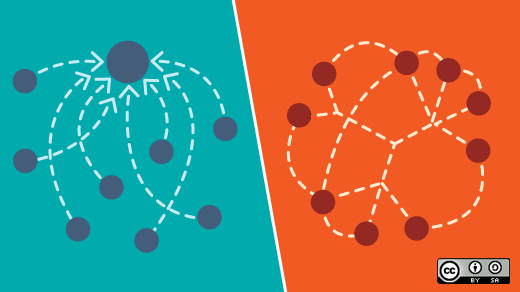 When marrying the art of community building to the art of brand building, it’s hard not to talk about building “brand communities.” It’s a convenient term, and brand experts love to trot out examples like Harley Davidson and Apple as examples of thriving communities built around brands.
The term “brand community” even has its own Wikipedia page (definition: “a community formed on the basis of attachment to a product or marque”). Harvard Business Review writes about brand communities. Guy Kawasaki writes about brand communities.
Yet almost every article I’ve read about building “brand communities” shares a common trait:
They are all written by brand people for brand people.
The result? Articles focusing on what’s in it for the brands (and the companies behind them), not what’s in it for the communities. Learn how to build a brand community so your company will succeed, not so a community will succeed.
Typical corporate thinking.
What if we turned things on their heads for a second and changed the words around? What if, instead of “brand community,” the phrase du jour was “community brand?”
[Read the rest of this post on opensource.com]
Facebook breaks the brand permission rules
Back in February, I wrote a post about how Google stepped beyond its brand permission limits with the launch of the Buzz platform, a classic brand mistake (read more about brand permission here or here). Over the last few months, Facebook has also moved into a dangerous brand space, and may be doing permanent damage to its brand in the process.
 You’ve probably seen people (or participated in) spewing venom at Facebook about its privacy practices, so I certainly won’t rehash that stuff here. If this is news to you, and you want to see what people are saying and how Facebook is responding, this interview in The New York Times with Facebook’s VP for Public Policy from earlier this week is a good starting point.
So, beyond the (really good) privacy reasons, why is it so bad that Facebook is making more of your information public by default? What’s the brand mistake? Let’s again look to the brand tags site for some clues. According to the site, the top terms associated with Facebook are:
addictive
annoying
boring
college
community
friends
fun
kids
lame
myspace
networking
people
social networking
stupid
waste of time
young
I’ve put in bold a few terms I think are especially important. If I was to put them in a sentence, it’d read something like “Facebook is a social networking site where people have fun or waste time with their community of friends.”
For most people, this sentence describes the service they signed up for. And hundreds of millions of people must value the Facebook brand for this purpose, because Facebook has been one of the fastest growing platforms the world has ever seen.
Brand positioning tip #10: repetition is the secret ingredient
When I was at Red Hat, I sometimes got questions from folks who wanted to know the secret to Red Hat’s brand success. First off, I’d always say you don’t grow a $1 billion technology company on brand alone. We sold great products. We treated our customers and developers well. We had a revolutionary business model. Those kinds of things are the bedrock of a successful brand.
But if I was to point to one “secret” thing I think had a big impact on the brand it would be a very simple one:
We said the same thing. Over and over. For years.
For me personally, sometimes I said things so many times I was just as sick of hearing myself as others were.
When people would come to me and ask if they could make a tan hat to give away at tradeshows rather than a red one, I would always repeat: “But we are Red Hat.” We brand folks would always be the ones to bring up the company mission, values, and culture. We’d steer conversations back toward the open source way when they went astray. When my colleagues and I would speak about the culture and brand in orientation, we’d tell the same stories, show the same videos of Bob Young and Matthew Szulik to new employees year after year after year.
When it comes to brand positioning, the biggest mistake you can make is to invest your time, money, and energy in discovering your optimal brand position… and then give up on it before it has a chance to do its magic. Building a great brand has to be done over time and, to paraphrase Jeff Bezos of Amazon, there are no shortcuts.
I’ve worked with a lot of creative types over the years, and most of them love to come up with new ideas. Heck we all do. But sometimes the thing that makes you stand out when everyone else is saying something new is to say something… well… old.
A modest proposal to save The New York Times
I love The New York Times, the best newspaper in the world. There is no greater pleasure than sitting out on the patio on a Sunday morning, reading The New York Times, and learning.
 I stress the word learning because there are so few places left in our world where true discovery happens. Most of the time, marketers, computers, and even our friends are showing us more of what we already know we like, rather than introducing us to things we have never seen or heard of before.
In the pages of The New York Times, I can be introduced to people, places, events, ideas I would have never found on my own. Every day I read The Times I learn something new. The paper expands my understanding of the world rather than reflecting back to me the understanding I already have.
This is an incredibly valuable service. It is a service that very few media companies in the world still provide (my local paper, the Raleigh News and Observer, rarely does these days, sadly).
Yet, the ongoing conversation about how to solve the financial issues of The New York Times revolves around fixing the business model for newspapers. Most experts say the model is fundamentally broken, and a report released last week by the Pew Research Center’s Project for Excellence in Journalism doesn’t have a lot of good news for the future of journalism as a whole.
From my vantage point, the answer to fixing The New York Times will not come from exploring a revolutionary business model. It will come from a revolutionary brand, culture, and community model. Let me explain.
Brand positioning tip #9: A brand mantra is not a tagline
In Brand Positioning Tip #3, I introduced the concept of the brand mantra. The term was originally coined by Scott Bedbury during his time at Nike, and it refers to a short 3-5 word phrase created to capture the very essence of the brand’s meaning.

Was I supposed to Just Do It or embody Authentic Athletic Performance? I'm not sure. I'll just cross the finish line instead.
Usually a brand mantra includes or hints at some of the points of difference discovered during the brand positioning exercise (learn more about points of difference here). The most famous example of a brand mantra is from Bedbury’s Nike project, where the team coined the brand mantra Authentic Athletic Performance.
The most important thing to understand about brand mantras is that they are not designed to be externally facing slogans or taglines. Case in point— unless you’ve heard the Nike brand mantra story before, you’ve probably never seen the phrase Authentic Athletic Performance associated with Nike in advertising. Usually you will see an external manifestation of it, Just Do It being the prime example.
This is where most well-meaning brand mantra projects go bad. When brainstorming possible brand mantras, it is important for your team to be very clear that they are not writing advertising copy or taglines for external use. There is no quicker path to an inauthentic brand mantra than heading too quickly toward the language of advertising or marketing.
A brand mantra should resonate internally first. The mantra you chose should reflect the core values, mission, and culture of the company while also staying true to the brand positioning (if this is difficult, you’ve got bigger problems, because it may mean your culture and your brand are out of alignment).
The most powerful brand mantras become part of the DNA of the organization, and are used to guide everyday decisions about strategy, user experience, voice, and a host of other things. The mantra becomes a touchstone that is returned to over and over again— especially when decisions start getting tough.
Once you’ve settled on your brand mantra and tested it internally to ensure it resonates, you can finally start working on taglines. Again, think of a tagline as an external manifestation of the brand mantra— written in a language that will resonate with your target customer instead of your co-workers.
Love, hate, and the Wikipedia contributor culture problem
Last fall, a group of researchers at the Palo Alto Research Center (PARC) released a study showing an abrupt leveling off in the number of editors and edits to Wikipedia, starting in about 2007.
 There is a great summation of the findings in a set of posts by Dr. Ed H Chi, Lead Scientist at the PARC Augmented Social Cognition group here, here, here, and here.
I’ve been thinking a lot over the past few months about what might be causing the slowing rate of contributions, as have many others. I particularly liked Niel Robertson’s post last week on the Enterprise Irregulars site.
Niel’s thesis is that Wikipedia has failed to continue to develop innovative ways to motivate its community, falling behind as other communities and companies have implemented more creative new techniques. Niel goes on to identify seven types of motivation for crowdsourcing (yes, I still dislike that word) efforts, of which he says Wikipedia is only using a couple.
I think he is on to something. But Wikipedia is operating at a scale that dwarfs almost every other crowdsourcing effort in history. It takes a massive bureaucracy of editors and administrators to keep the whole thing going.
And if traditional bureaucracies (like those in governments and large companies) tend to stifle innovation, what happens in a bureaucracy where the bureaucrats aren’t getting paid and aren’t getting any recognition for their efforts?
From my point of view, this is Wikipedia’s next great challenge:
How does it convince the world to love and recognize its contributors?
[Read the rest of this article on opensource.com]
Democracy: a reason for communications and HR folks to party together
I recently finished the new book Digital Strategies for Powerful Corporate Communications, by Paul Argenti and Courtney Barnes. I must admit, I’m allergic to many Web 2.0 books. This book does have some of that social media handbook feel, but I was excited about it because co-author Paul Argenti, a professor of communications at Dartmouth, is someone whose ideas about communications have really influenced my thinking over the past few years.
 Paul was one of the masterminds behind The Authentic Enterprise, a whitepaper that may be one of the most compelling looks into the future of the communications field I have ever seen. I’ve written about it previously here, here, and here.
The following paragraph highlights the point of view from which this book approaches digital communications strategy:
“The business of managing relationships– and therefore, business itself– has changed dramatically in the last decade. Stakeholder empowerment, as it’s come to be known, has shifted the corporate hierarchy of influence from the hands of elite business executives to those of their once-passive audiences, including employees, consumers, media, and investors.”
This paragraph does a nice job illustrating what we might define as the democratization of corporate communications.
—–
Democratization of Corporate Communications:
Any person communicating about any company at any time.
—–
A company’s own communications professionals can no longer expect to be the only communicators of the brand message. Employees are communicators. Customers are communicators. Even former employees and former customers can now communicate on behalf of brands. Scary stuff or exciting stuff, depending on who you are.
One of the things I really liked about this book is that it has an entire chapter highlighting a favorite subject of mine: the need for closer ties between the human resources and communications function. Why? Simple:
In a world where everyone is a communications person, everyone needs to be on brand.
Hey, I Wrote a Book!

Available now in print and electronic versions.
 Dark Matter Matters