Dark Matter Matters
Chris Grams
Army training the open source way
Very cool article in the New York Times yesterday entitled Care to Write Army Doctrine? With an ID, Log On.

Pvt. Winger sez let's open source ARMY TRAINING, SIR!
The gist is the Army is running an experiment in mass participation, allowing any member of the Army, from five star general to latrine specialist, to edit a test group of seven Army field manuals using an online wiki. From the article:
“For a couple hundred years, the Army has been writing doctrine in a particular way, and for a couple months, we have been doing it online in this wiki,” said Col. Charles J. Burnett, the director of the Army’s Battle Command Knowledge System. “The only ones who could write doctrine were the select few. Now, imagine the challenge in accepting that anybody can go on the wiki and make a change — that is a big challenge, culturally.”
It sounds like the reaction within the Army has been all across the map, some viewing it as an extremely progressive step forward to others thinking the idea is totally crazy. But top Army leadership appears to be behind the idea. Again from the article:
The idea has support at the highest ranks. Lt. Gen. William B. Caldwell, the commander of the Combined Arms Center at Fort Leavenworth, Kan., wrote on the center’s blog on July 1, that “by embracing technology, the Army can save money, break down barriers, streamline processes and build a bright future.”
Here at Dark Matter Matters, we give this idea a huge +1. The army is employing some of the same principles we open source folks have employed to great success. A few key parts of the open source way applied here:
Whole Foods and the brand promise
Whole Foods is a clear example of a mission-driven company. Over the years, they’ve taken strong activist stances on a number of topics related to healthy living. In fact, they are one of the few big corporations that I’ve seen actually link to their values as a main navigation element on their homepage. You’ve probably also seen these same values posted in your local store. I think this is awesome.
 And personally, I love Whole Foods. My guess is, based on their corporate values, that their core customer leans to the left politically.
This week, in the Wall Street Journal, John Mackey, CEO of Whole Foods, wrote an editorial entitled The Whole Foods alternative to Obamacare.
I see the strategy… a few weeks ago, Whole Foods launched a campaign to help empower Americans to lead healthier lives. At the campaign launch, Mackey even said Whole Foods is going to reverse the 14 year trend toward having more pre-processed food in their stores. I’m sure this editorial was one piece of a larger campaign strategy. And certainly most people would agree that Americans could use a healthier diet.
In moving from talking about healthier food into talking about healthcare, Whole Foods has hit on a massively politicized issue. When your core customers lean to the left, and as a corporate leader you take a position to the right, you take a risk that people might start to question whether they really affiliate themselves with your brand promise.
Markepoetry Part 5: Once the genie is out of the bottle
It’s been a while since I wrote a piece of markepoetry, but this poem suddenly appeared in my head this morning. This one isn’t traditional old skool markepoetry (which relies on real words of marketing people for its strength), but it does seem strangely appropriate to the marketing world for me.
—
Once the genie is out of the bottle,
Some people devise strategies to get him back in,
Some people angrily search for the idiot who rubbed the bottle,
Some people cry and remember what life was like before he got out.
Some people make wishes.
–
Markepoetry is the language of marketing, made beautiful.
The epic FAIL fail
There was an interesting article in the New York Times Magazine this weekend about the metamorphosis of the word fail from verb to interjection. I know, I know, most of the computer-y world has been using the word in this way for quite some time (need some examples? go check out FailBlog). It’s old news.
 But when the New York Times picks up on the meme, it means we have entered a different stage of acceptance altogether. It might be time to start paying attention before things get out of hand.
Anil Dash wrote an interesting post called The End of Fail a few months ago where he articulated some of the reasons why FAIL is such an ummm… FAIL for collaborative cultures.
Fail is over. Fail is dead. Because it marks a lack of human empathy, and signifies an absence of intellectual curiosity, it is an unacceptable response to creative efforts in our culture. “Fail!” is the cry of someone who doesn’t create, doesn’t ship, doesn’t launch, who doesn’t make things. And because these people don’t make things, they don’t understand the context of those who do. They can’t understand that nobody is more self-critical or more aware of the shortcomings of a creation than the person or people who made it.
When attempting to build a collaborative culture where innovation flourishes, the biggest enemy, as Tom Kelly has pointed out, is the Devil’s Advocate. I almost feel like the person who shouts FAIL is a worse member of the same species. At least the Devil’s Advocate brings some opposing ideas to the table. The FAILman delivers only judgment.
Red Hat brand tip: esse quam videri
A long time ago, a smart North Carolina native mentioned to me that the official NC state motto was the Latin phrase “esse quam videri,” which translates as “to be rather than to seem to be.” Yeah, I didn’t know states had mottoes either. Turns out a lot of them do.
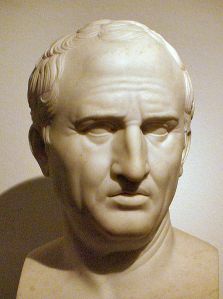
Cicero sez take my advice and be rather than seem. It's Latin, which makes it right, people.
I was struck by this phrase. As Red Hat has grown from North Carolina roots into an international company with offices around the world, we’ve adopted this one little piece of North Carolina-ness as an unofficial litmus test for the Red Hat brand voice as well.
Esse quam videri first appeared in the Cicero essay On Friendship, but a similar concept can actually be traced back to the Greek playwright Aeschylus. His line, which later appeared in Plato’s The Republic, was “His resolve is not to seem the best but in fact to be the best.” You can find more on the history of the phrase here.
Esse quam videri inspires authenticity. When Red Hat is communicating at our best, we use esse quam videri as the muse of simple, honest talk; conversation that doesn’t hide behind the foreign languages of marketing, law, or business.
Sometimes it inspires us to not communicate at all, to simply do instead. When we are not communicating well, we are not listening to our muse.
New sections for brand positioning tips and book info
Finished some cleanup work on the site tonight, adding new pages compiling all of the brand positioning tips in one place. Also added a page called books where I combined all of my lists of books and book reviews/commentary in one place. Hope this makes things a bit easier to find from the homepage!
In a fight between Chris Anderson and Malcolm Gladwell, I have five bucks on Chris
I just finished reading the new book Free by Chris Anderson, which I read on my sweet new Kindle for the low, low price of… you guessed it… free (the Kindle edition was free for the first month, but you missed it, $9.95 now).
 For those of you who aren’t familiar, Chris Anderson has been with Wired Magazine since 2001, and is currently the Wired Editor in Chief (a fact that I copied directly from Wikipedia, something he has also been accused of doing).
I’d consider Chris a member of the pantheon of Folks Who Can Decently Explain What the Heck Is Happening On This Planet Right Now, alongside Thomas Friedman, Malcolm Gladwell, and Michael Pollan, among others.
However, I have only recently forgiven Chris for his long tail concept that unleashed hordes of marketing droids blathering on for hours about the long tail of this and the long tail of that a few years back. I’m not saying he wasn’t right, it was a great book. But, dude, you have no idea what you put us through. Torture.
Here is my attempt to paraphrase the 300 pages of Free in two sentences:
The price of digital content is moving quickly toward free. So stop bitching about it and figure out a business model that allows you to make a decent living anyway.
It’s a brilliant book. And I’m not just saying that because I work for a company that figured out a way to build a profitable business model that plays well with free. As I was reading, I kept thinking how eloquently Chris was stating complex concepts that I’ve been living with at Red Hat for years, but had never been able to articulate (he even mentions us in the book three times, score!).
I also kept thinking what another great truthteller named Bob Dylan once said: “You don’t need a weatherman to know which way the way the wind blows.”
Or maybe you do. Turns out there are a lot of people out there who passionately disagree with Chris Anderson about the conclusions he draws in this book that I found rather obvious.
Sharing wins in recessionary times
Last week, I wrote a post about our newest version of the Red Hat brand story, which starts with two simple lines:
Your mother was right. It’s better to share.

Share Bear sez: Let's get on the sharing train, people!
Over the weekend, I stumbled across an interesting piece originally written for the Washington Post, entitled Recession Lesson: Share and Swap Replaces Grab and Buy.
According to the article, sharing is in again. Which is happy news for us open source folks. Here’s how the article starts:
The recession is reminding Americans of a lesson they first learned in childhood: Share and share alike. They are sharing or swapping tools and books, cars and handbags, time and talent.
The article goes on to cover examples of sharing in everyday life brought on by recessionary times: sharing gardens, sharing chores, sharing clothes– just like the old days, perhaps?
The sharing mind-set is not new to the American culture, but many Americans abandoned it when the nation shifted from an agricultural society to an industrial one, said Rosemary Hornak, a psychology professor at Meredith College in Raleigh, N.C. They moved farther from their families and did not have time to connect with new neighbors because they worked so much, she said. Now that people are experiencing financial distress, they don’t want to be alone.
So give your mom credit. She not only predicted where the future of the software industry is headed, but also gave you some great ideas for surviving this tough economy.
Well played, mom. Well played.
Sharing your brand story (and here’s ours)
The most compelling brands in the world tell compelling stories. Whether the brand is Nike (the Greek winged goddess of victory was named Nike, and it all rolls from there) or IBM (Thomas Watson and THINK) or [your favorite brand here], the most interesting brands have great mythologies built up over time. The brand story is deeply ingrained in their actions, voice, look, and culture.
It’s been almost eight years since we created the first Red Hat Brand Book. The original book was an attempt to capture the essence of our Red Hat story, to explain what Red Hat believes, where we came from, and why we do what we do.
It had a secondary mission as an early brand usage guide, explaining what Red Hat should look and sound like at a time when the company was expanding rapidly around the world and brand consistency was becoming harder to achieve.
When most companies create this sort of document, they call it a “Brand Standards Manual”, or something like that. But we were young, foolish, and drunk on the meritocracy of open source, so in the first version of the Brand Book, we emblazoned the words “This is not a manual” on the front cover.
Why? We wanted to be very clear this book was the starting point for an ongoing conversation about what the Red Hat brand stood for, looked like, and sounded like, rather than a prescriptive “Thou shalt not…” kind of standards guide.
I hate brand standards that sound like legal documents. I’ve always felt like the role of our group was to educate and inspire, not to police, and we tried to create a document that embodied that spirit.
This year we launched the biggest update yet to the Brand Book. In doing so, we actually split it into two projects:
Matthew Szulik and the Red Hat vision
The BBC conducted a great interview with Red Hat Chairman Matthew Szulik while he was attending the Ernst & Young World Entrepreneur of the Year awards recently (representing the United States as our winner). You can listen to it here.
This interview is a wonderful reminder of the powerful impact of a corporate vision that extends beyond just making money. And a great reminder for me of how lucky I have been to learn about leadership, community, culture, and brand from the 2008 United States Entrepreneur of the Year.
If you are interested in learning more about Matthew Szulik, his vision, and how it evolved, here is a wonderful oral history of his life that was commissioned a few years ago.
Hey, I Wrote a Book!

Available now in print and electronic versions.
 Dark Matter Matters