Dark Matter Matters
Chris Grams
Google Buzz didn’t get permission, but it also didn’t get brand permission
You’ve probably seen at least one of the 9 zillion articles written over the last week about Google Buzz. The feedback from the public has been, well… kinda ugly. There are plenty of articles and blogs analyzing problems with the Buzz launch around user privacy, opt in vs. opt out, and that kind of thing, so I won’t rehash those arguments.

Bumblebee sez: yo Google, you really should have asked first!
In this post, we’ll look at the brand mistake Google made in how they launched Buzz.
This article from the San Francisco Chronicle website about a class action lawsuit filed against Google caught my eye because of the following paragraph:
Google turned Gmail “into a social networking service and that’s not what they signed up for, Google imposed that on them without getting their consent,” said Kimberly Nguyen, consumer privacy counsel with EPIC of Washington, D.C.
That sentence is a great articulation of why Buzz is a classic case of not securing brand permission, a subject I have covered here and here.
To be of any value, a brand must create meaning in people’s minds. People associate certain terms or ideas with that brand. If you want to see a awesome experiment in brand meaning, check out the Brand Tags site.
What if politicians innovated the open source way?
In the discussions around some of my previous articles, I’ve noticed a trend: we seem to be focusing on cultural changes that need to be made for the open source way to be effective in contexts beyond technology. One cultural context I think could really use some help is politics.
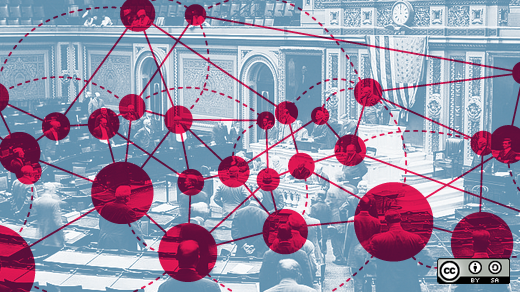 I read an interesting post last week by Morton Hansen (author of Collaboration: How Leaders Avoid the Traps, Create Unity, and Reap Big Results) entitled Obama’s Five Collaboration Mistakes. In the comments below the post, some folks interpreted his words as an attack on the Obama administration. Me? I’d probably interpret Hansen’s words more broadly. Perhaps something like:
Politicians are pretty darned bad at collaborating a lot of the time.
I think many folks would agree with this statement no matter where they sit politically. No matter where they live around the world.
In fact, the word “political” has become almost synonymous with anti-collaborative behavior in many contexts. Certainly in the business world.
But there is a lot a stake here. The economic downturn has hurt our businesses badly. And this has affected many of us in even more personal ways. Jobs. Homes. Security.
We need innovation in the political world to help solve the problems of the business world. Which means we are going to need better collaboration across political boundaries, both inside and between our countries.
Could we open source folks help?
[Read the rest of this article on opensource.com]
Brand positioning tip #8: five great books you should check out
For today’s tip, I thought I’d compile a list of my five favorite brand positioning books in one place. I’ve tried to put them in some semblance of an order, with the must-reads at the top.
 1. Positioning: The Battle for Your Mind by Jack Trout and Al Ries: The original book about positioning from the folks who coined the term. I’ve linked here to the 20th anniversary edition, which has some more modern examples than the original. Jack Trout and Al Ries have gone on to milk the positioning meme with about a zillion other books. I’ll link to some more of the best of these below.
2. Strategic Brand Management by Kevin Keller: Not only a great book on positioning, but on every other aspect of brand management as well. I use Kevin Keller’s model every time I run a positioning exercise. If you have already mastered the intellectual side of the positioning concept, consider this book the how-to manual. Expensive– it is a business school textbook– but worth way more than five lesser branding books.
3. Zag by Marty Neumeier: He calls it “radical differentiation,” but this is at heart a book about brand positioning from the guy that wrote The Brand Gap, one of my favorite branding books. It’s short, well-designed, inexpensive, and easy to understand. What more could you want?
4. The 22 Immutable Laws of Marketing by Al Ries and Jack Trout: I have a soft spot for this book because it introduced me to the concept of positioning– I actually didn’t read the original Trout and Ries Positioning book until later. This is billed as a more general marketing book, but is still a positioning classic from the guys who invented the term.
5. Differentiate or Die by Jack Trout: Another classic from the usual suspect. Sure, by the time you read this, you’ll probably start feeling like you’ve heard it all before. After all, positioning is a fairly simple concept– just hard to execute well.
These books should set you on your way to a clear understanding of brand positioning. One last link: Jack Trout has a new book on positioning that just came out last fall called Repositioning: Marketing in an Era of Competition, Change and Crisis, and it is being billed as the 30th anniversary update of the original positioning concept. I haven’t read it yet, but have it on my Kindle ready to go and will write a post about it when I am finished.
Happy reading!

Is the traditional business world at war with creativity?
Earlier this week some colleagues and I attended a fantastic gathering of business and political leaders called the Emerging Issues Forum. The theme of the forum—interestingly enough for a bunch of business folks—was creativity, and speakers included some of my favorite thinkers/authors who analyze the future of business: 
- Roger Martin, Dean of the Rottman School of Management at the University of Toronto, and author of The Responsibility Virus, The Opposable Mind, and a new book on design thinking called The Design of Business.
- Tom Kelley, General Manager of legendary design firm IDEO, and author of The Art of Innovation and The Ten Faces of Innovation. IDEO’s CEO Tim Brown also has a book out on the subject on Design Thinking, called Change by Design, which my friend Jonathan Opp wrote a nice review of here.
- Daniel Pink, bestselling author of A Whole New Mind, a book that has been extremely influential in my thinking about how the left brain and right brain can play nice in the business world. Pink also has a new book out, called Drive: The Surprising Truth About What Motivates Us.
During their talks, I couldn’t help but notice all three touched on a similar thematic: the crucial role that inspiring creativity plays in driving innovation.
[Read the rest of this post over at opensource.com]
Three signs your corporate culture isn’t ready for the open source way
It’s a good bet that the next generation of defining companies will have corporate cultures built the open source way– around openness and collaboration, while fostering community and culture that extend outside the company walls.
 In fact many of the defining companies of the first decade of this century show these characteristics (with one very notable exception we discussed earlier).
It kind of makes you want to rush in and see if you can change your old style corporate culture and get in on the action. But try to change too fast and your efforts may backfire.
So here are three signs that your corporate culture may not quite be ready for the open source way– and some tips to help you move closer.
[Read the rest of this post over at opensource.com]
Reporting live from the front lines of the war on creativity
Today I spent a great day at the Emerging Issues Forum, where I’m proud to say my home state of North Carolina attracted some of the top business minds in the world (the Twitter stream is going crazy here). This morning featured two Dark Matter Matters all stars, Roger Martin and Tom Kelley (who I have written about previously here and here), but there was also an incredible lunch session where Charlie Rose interviewed husband and wife creative geniuses Nnenna Freelon (the 5-time Grammy nominated jazz vocalist) and Philip Freelon (architect extraordinaire), and plenty of other enlightening stuff.
 The theme of the conference is Creativity, Inc., and from what I can tell from many of the attendee and host comments, the theme of this year’s event is very different than years past. But the undercurrent of many of the comments from this morning seemed to take a clear point of view on this theme.
My interpretation? For years the business world has been waging a war against creativity… and creativity is beginning to fight back.
It’s about damn time.
Roger Martin is one of the most eloquent speakers in the world on the need for change in business. Some key points from his talk today:
Martin talked about two types of industries– clustered industries (where much of the industry is in one part of the world, Silicon Valley for high tech being one good example) and distributed industries (where the industry is dispersed all over, hair salons and pizza places being two examples).
Martin’s research shows that clustered industries have a higher percentage of the creative class of workers. The average salary for a creative worker in a clustered industry? About $70,000 per year. But for a creative worker in a dispersed industry? Only about $56,500 a year. Pretty big difference.
So what does it mean? According to Martin, income disparities will continue to grow unless we can figure out what to do with routine jobs in dispersed industries.
He calls this one of the greatest policy challenges of the 21st century: How can we increase the percentage of creativity we use in all jobs? How can we make use of the whole human being in work environments?
I love this thought of us figuring out how to use the whole human being– how many jobs do we see that leave tons of creative potential on the table, at the expense of not only innovation, but also employee happiness? Too many, in my experience. And at all levels in business, from executive on down.
Brand positioning tip #7: don’t abandon your strengths
One nice thing about this new gig blogging over at opensource.com is it gives me some room to go back to my brand and culture roots here at Dark Matter Matters. So today we return again to my favorite subject: brand positioning.
Specifically, I want to cover one of the scariest brand positioning mistakes a company can make– abandoning the position that got them where they are before they’ve established a credible new position.
You’ve seen it before. You walk into a meeting with a new advertising agency or an overzealous marketing executive, and, with great dramatic effect, they say something akin to this: “We are not in the toilet paper business! We are in the cleansing and renewal business!” Then they pause and look around, waiting for the cheers and high fives to start as people salute genius.
Don’t get me wrong. I believe strongly in establishing a higher purpose for your brand. And I think it is fantastic when brands are aspirational. The mistake is not in extending your brand position– in fact, we’ve covered some good tips on how to do it responsibly in this post and this one.
The mistake is abandoning the position you already own in the customer’s mind before clearly establishing the new position– in their mind, not in yours.
I’ve shown this chart inspired by Kevin Keller (one of my brand positioning mentors) before, but it is directly relevant here.
The Apple exception: where open innovation theory breaks down
Over the last few weeks, I’ve noticed more folks pointing out a paradox that has been driving me nuts. As many companies embrace open innovation and culture, there is one incredibly successful holdout: Apple. Three articles on the subject here, here, and here.
 I suspect few people would claim Apple has an open culture– stories about secrecy at Apple are legendary. You could argue that Apple has done some impressive experiments in open innovation– most notably their iPhone App Store. But even their open stuff seems decidedly, well… closed.
I’ve noticed Google has been making a much bigger deal about their openness recently, and you have to imagine that part of the reason for this is to differentiate themselves in the consumer market from Apple.
[Read the rest of this post over at opensource.com]
Brand positioning tip #6: build peninsulas, not islands
In previous posts about brand positioning, we’ve talked about points of parity & points of difference, the competitive frame of reference, brand mantras, and the concept of “brand permission” as tools you can use when developing your brand positioning. Today I want to cover one of the biggest positioning mistakes that I see companies make.

Island hopping is for the South Pacific, not for brands.
I call it island hopping. Let me explain with an example.
Say your company makes dish detergent. You’ve been making dish detergent for 50 years. All you know how to make is dish detergent. Your kids grew up as the famous heirs to a dish detergent fortune. When you show up at parties, people go “hey, look, it’s that dish detergent dude/dudette!” (When your kids show up at parties, people start whispering about videos they saw on the internet, but that’s another story).
Now you hire a new CEO. He has a Harvard MBA. He shows you lots of PowerPoint slides that explain how crappy the market for dish detergent is going to get over the next 50 years. He says you need to diversify into another business, and he suggests the boutique hand soap business is starting to really heat up (after all, who doesn’t want to smell like juniper peppermint citrus after they wash their hands?).
And he’s right. Your kids are spending all your money, and the dish detergent business is going pretty sour.
Introducing opensource.com
One of the things I’m most excited about as I start my new job at New Kind is that I have the opportunity to continue to do work with Red Hat. Today, in the spirit of release early, release often, Red Hat opened the doors to a new website, opensource.com. In addition to my work here at Dark Matter Matters, I’ll also be writing for the Business channel of opensource.com.
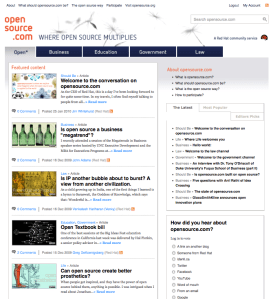 So what is opensource.com?
It is the beginning of a conversation about how the world can apply the lessons of the open source way broadly– in business, in government, in education, in the law, and generally in our lives. Unlike most other open source sites, it is not just about software. From the site:
The term open source began as a way to describe software source code and the collaborative model for how it’s developed. Red Hat used this model for developing technology and built a business model around open source and its principles: Openness. Transparency. Collaboration. Diversity. Rapid prototyping… The open source way is more than a development model; it defines the characteristics of a culture.
Although this site was started by Red Hat, it is not intended to be a Red Hat site, but rather a site where the open source conversation is extended to all companies and organizations, even beyond the technology industry. Red Hat CEO Jim Whitehurst states it really well in his introductory post:
Hey, I Wrote a Book!

Available now in print and electronic versions.
 Dark Matter Matters