Dark Matter Matters
positioning
Brand tip: Call a duck a duck
Imagine this: You walk into a pet store, looking for a canary, because, i don’t know, maybe your coal mine is having dirty air issues or something. The salesman, eager to please, walks you over to a cage with a duck sitting in it.

I may be yellow, but I ain't no canary, yo.
He says, “Do I have just the thing for you, check out this canary. He is a new, better breed of canary. He has webbed feet, can swim, quacks rather than sings, he’s bigger. We call this the web-footed hydro ultracanary. You’ll love him.”
So you buy the “canary” and take him into your coal mine, where he quacks incessantly. In fact, he is still waddling around quacking about ten minutes after you and all of the other miners are lying dead from breathing poisonous air.
In this case, the brand promise (a canary) and the brand experience (a duck with strong lungs) did not match. If you had been looking for a duck, this little guy would have probably been perfect. But as a canary… not so much.
One of my favorite brand rules is to call your ducks ducks. What do I mean? Make things simple for your customers. Don’t make them learn your language or analyze your intent in order to understand your message. Be straight with them.
Brand positioning tip #5: the brand audit
Oh no! An audit? That can’t be good, right?
Actually, if you are a brand manager, a brand audit is an incredibly useful tool (I’m sure the IRS feels the same way about their audits).
What is a brand audit?
There are plenty of people out there who’d be happy to tell you about brand audits (here are a few interesting links). But as you found out in previous brand positioning tips, I’ve learned a lot about brand positioning from Dr. Kevin Keller, author of Strategic Brand Management and professor at Dartmouth (plug: buy the book, great section on brand audits). When we did our most recent brand audit at Red Hat, we used Dr. Keller’s approach.
A brand audit is a deep introspective look at your brand from inside and out. Done the Kevin Keller way, the audit is made up of two pieces: 1) the brand inventory and 2) the brand exploratory.
I think of them this way:
Brand positioning tip #4: brand permission
In brand positioning tips 1-3, we discussed the 4 elements of good brand positioning: points of difference, points of parity, the competitive frame of reference, and the brand mantra. In this post, we are going to switch gears and talk about a subject called brand permission.
 When attempting to position your brand in a new competitive frame of reference (or, in non-marketing-ese, when you want to start selling stuff in a new market), consider whether your brand has earned permission to enter that market.
How do you know if you have permission? And who do you need permission from? Well, let’s look at a few examples.
Back in the early 1990s, Clorox underwent a failed experiment in extending the Clorox brand into detergent. There is a nice short writeup of it here. Why did the detergent product fail?
Brand positioning tip #3: the brand mantra
In previous posts, we’ve covered three of the four elements of good brand positioning as I learned them from Dr. Kevin Keller, 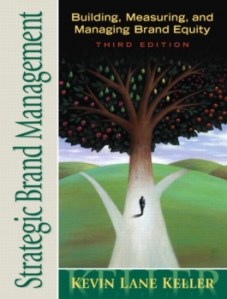 author of the classic branding textbook Strategic Brand Management:
- Points of difference: the things that make you different from your competition (and that your customers value)
- Points of parity: the places where you may be weaker than the competition and need to ensure you are “good enough” so you can still win on the merits of your points of difference
- Competitive frame of reference: the market or competitive landscape in which you are positioning yourself
Today we will be covering the 4th element of good brand positioning: the brand mantra.
What is a brand mantra?
A brand mantra is a 3-5 word shorthand encapsulation of your brand position. It is not an advertising slogan, and, in most cases, it won’t be something you use publicly.
According to Scott Bedbury, author of A New Brand World (one the of top 10 books behind Dark Matter Matters), the term brand mantra was coined during his time at Nike.
Brand positioning tip #2: the competitive frame of reference
In Brand Positioning Tip #1, we covered 2 of the 4 key elements of successful brand positioning done the way Dr. Kevin Keller taught me: points of parity and points of difference. Today, I’d like to highlight the third key element of good brand positioning– understanding your competitive frame of reference.
Competitive frame of reference is a fancy way of saying “the market you compete in.”
This sounds pretty simple, huh? It can be… If you run a furniture store, your competitive frame of reference would probably be the furniture market. If you run a tattoo parlor, your competitive frame of reference would probably be the tattoo market.
Those are pretty cut and dry cases. But have you ever stopped and wondered to yourself, “exactly what market am I competing in?” and realized that you are really competing in a market that is not initially obvious? Or that you are actually competing in multiple markets? If either of these situations are true, you may discover you need to create points of parity and points of difference for each market where you compete.
Here is an common example of a less-than-obvious competitive frame of reference.
What market do you think Starbucks is in? The coffee market? Maybe. In the coffee market, Starbucks competes with grocery stores, fast food restaurants, other coffee shops, and home brewers. Tough market… they aren’t competitive in the coffee market on price, there are probably options that (arguably) taste better, maybe have shorter lines. It’s hard to believe that Starbucks would have grown as big as they are by simply competing in the existing coffee market.
Summer reading list for Dark Matter Matters
Ah, vacation… the time when the work shuts down for a few days and the Dark Matter Matters blog comes out of hibernation… 3 posts in 3 days!

A few months ago I wrote a post where I highlighted the top ten books behind Dark Matter Matters. In that post I promised to create a list of the books that didn’t make the top 10 cut, but are still pretty awesome.
So here, to celebrate the long holiday weekend, are some more books that have inspired Dark Matter Matters.
Books about how large-scale collaboration is pretty much the deal:
Wikinomics by Don Tapscott and Anthony Williams
The Wisdom of Crowds by James Surowiecki
The Starfish and the Spider by Ori Braffman and Rod Beckstrom
In the open source world, there’s a legendary quote attributed to Linus Torvalds (yes, he is the guy that Linux is named after) “Given enough eyeballs, all bugs are shallow.” The first two of these books are the extended dance remix of this quote. Each has a unique take, but both show how mass collaboration is changing everything about our society and the way we solve problems. The Starfish and the Spider is a interesting look at leaderless organizations and is a nice book for anyone trying to understand how the open source movement (and other leaderless organizations) work, and why open source is so hard to compete against. It is also a nice complement to the Mintzberg article I wrote about in my previous post.
Brand positioning tip #1: points of parity and points of difference
In my recent post on the books behind Dark Matter Matters, I mentioned Dr. Kevin Keller from Dartmouth. Kevin is the  author of Strategic Brand Management, which placed #3 on my list. But in addition to being an author and professor, Kevin is also a long time friend of Red Hat. He has helped us work through some of the most challenging corporate branding and positioning decisions we’ve faced over the past six or seven years.
I thought it might be nice to pass along some favorite lessons that I learned from Kevin over the years, many of which we have put into practice at Red Hat. In this post, we’ll cover 2 of the key elements behind good brand positioning: Points of Parity and Points of Difference.
If you need the primer on what positioning is all about, read my previous post here or go buy a copy of Jack Trout’s book Positioning: The Battle for Your Mind.
There’s a working definition of points of parity and points of difference in Wikipedia here, but I hope the explanation below will appeal more to average folk who aren’t as into the marketing-speak.
Intel’s new campaign… about their culture!
Yesterday Red Hat’s brand manager, John Adams, showed me a New York Times article about Intel’s new brand campaign that they call “The Sponsors of Tomorrow” that launches on Monday.
From the Times article:
[The campaign] focuses on the amusingly weird, technology-focused culture of Intel and celebrates the company’s role in the future, rather than the present… the ads highlight achievements of Intel engineers in a humorous way.
The campaign is Intel’s first ever that focuses on the brand rather than products… and that’s where its power comes from.
…ad executives began spending time at Intel, and noticed its appealing culture. “We started thinking about Intel, like, ‘OK, what’s it like in the cafeteria when they’re in there eating lunch together?’ There’s got to be a whole hierarchy of people in there who they admire,” Mr. Bell said.
There first few bits are pretty funny and showcase the weird rock star computer nerd culture that exists in every tech company I’ve ever seen. It will be very interesting to see where Intel takes this… and how the public reacts. I’m kind of digging it myself!
The top 10 books behind Dark Matter Matters
Books are important to me. Growing up, almost every free wall in my parents’ house was lined with bookshelves, some of them stacked two deep. I spent most of my pre- Red Hat career in book publishing, first working during college at The University of North Carolina Press. After college, I went to work for a literary agent named Rafe Sagalyn in Washington DC. Working for Rafe was a great experience because he built his reputation on big think/idea books and business books.
His first big book was the huge bestseller Megatrends by John Naisbitt back in the early 80s. When I was there, I personally got to work with, among others, Bill Strauss and Neil Howe on their great books about generational patterns in society (check out The Fourth Turning… very prophetic these days) and Don Peppers, author of some books back in the 90s like The 1:1 Future about relationship marketing that were the grandparents of today’s books on social media marketing.
I also got to play agent and author myself too. As an agent, I represented some of Tom Bodett’s work (yes, he is the Motel 6 guy, but was also a commentator on NPR) and sold a wonderful novel called The Frequency of Souls to FSG. As author, I helped Rafe write two “cutting edge” books about getting free and open access to government information (they have not aged well, I’m afraid).
Fast forwarding to today, Rafe actually was the agent for two recent big think books that I love, Authenticity and A Whole New Mind, so he is still making things happen.
After I left book publishing, reading became fun again. I read novels and travel literature for a while, nothing that made me think too much. But when I got to Red Hat, I relapsed and started reading the big think books like the ones I used to work on with Rafe. I thought it might be worth taking a few minutes to try to remember the books that have been the biggest influences on my thinking, and get them all down in one place, so here goes:
Top 10 Dark Matter Matters books
Without these ten books, Dark Matter might not even matter to me.
How to successfully compete with open source software
Found an interesting post via a Twitter friend today with ideas on how proprietary software companies can compete with open source software. The guy who wrote it isn’t an open source hater, in fact he says he uses plenty of open source software for his own websites. His post also covers open source applications catering to consumers rather than businesses, so it’s not exactly Red Hat that he’s talking about here, but I still thought the ideas were worth taking to heart.
The first three ways he says you can successfully compete with open source software are, in this order 1) marketing 2) design 3) user experience. His reasoning? From the post:
OSS concentrates on the software, not the problems the software can solve: Take a look at an OSS site, any OSS site. You’ll see a whole lot of talking about the software, the implementation of the software, the source code for the software, how you can contribute to the software, etc. You’ll almost never see anything about the problem domain — the assumption is that, if you’ve stumbled upon the site, you already know you have a software problem.
I think he is on to something here. We open source software people do tend to sometimes fall in love with our software and how it is made and works, rather than falling in love with our customers and how we can understand and solve their problems. It is easy to agree with this in theory I’ve found, but in reality, it is a lot harder to stay focused on the customer’s needs when there is all this cool software to be made:)
Hey, I Wrote a Book!

Available now in print and electronic versions.
 Dark Matter Matters