Dark Matter Matters
Free
Do you have 10,000 hours in yet? The 21st century is waiting…
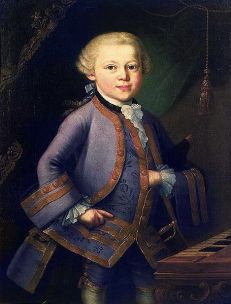
Baby Mozart sez I got my 10,000 hours of practice in before I was five years old, suckers!
Finally got around to reading Malcolm Gladwell’s new book Outliers. I’m late to the game on this one, so I’ll skip the full review and instead point to some good summaries about the book here, here, and here. I have other fun stuff I want to cover today.
For me, this book was his best yet. Gladwell’s gift is he is an amazing storyteller, and in this book he once again takes semi-boring academic research and makes it deeply relevant and interesting by crafting a beautiful story around it.
Here’s a short synopsis of Outliers. I decided to write it in the form of a limerick. I have no idea why.
Some folks become world-class Outliers,
Achieving success we can’t help but admire,
But smarts and ambition,
Aren’t the only pre-conditions,
Great timing and practice are required.
Basically, Gladwell is saying you can be the smartest guy on Earth and achieve nothing worth mentioning. But incredible, world-class success (think Bill Gates, Mozart, the Beatles) is a mashup of being born at the right time in the right place to the right people with the right genetic makeup while having the right things occur to you at exactly the right times in your life.
Oh, and you need to get in 10,000 hours of practice to become an expert at your craft.
This last concept really got to me. The idea that in order to become an expert in your field, you need to put in 10,000 hours of practice has been covered extensively. In fact there are two other books out describing the research behind this assertion, The Talent Code by Daniel Coyle and Talent is Overrated by Geoff Colvin.
Hearing the Bill Gates and Steve Jobs stories of perfect timing and early practice in Gladwell’s book started me thinking about a few things.
Free and the economics of Woodstock
1) In case you’ve been under a rock for the past week, this weekend marks the 40th anniversary of the original Woodstock Festival. 2) I recently finished reading Chris Anderson’s new book Free (which I covered in a post here). Listening to the Woodstock album again (on LP, I’m totally old skool) and thinking about Woodstock in the context of Free made me remember the announcement that changed the concert completely:
It’s a free concert from now on. That doesn’t mean that anything goes, what that means is we’re going to put the music up here for free. What it means is that the people who’re put — backing this thing, who put up the money for it, are going to take a bit of a bath. A big bath. That’s no hype, that’s true, they’re going to get hurt.
According to the New York Post, the initial budget for the festival was $500,000. The promoters’ goal was to host a three-day concert for about 100,000 people paying 5 bucks each. Although they met the goal of selling 100,000 tickets, the promoters never finished the ticket booths or fences (due to a late change in venue), and the crowd quickly became overwhelming. To avoid making a dangerous situation worse, they made the decision to turn Woodstock into a free concert.
Although great for the spirit of Woodstock, this was a devastating financial decision for the festival organizers. The Telegraph did an interesting interview with the Woodstock promoters where they explained the financial mess this way:
In a fight between Chris Anderson and Malcolm Gladwell, I have five bucks on Chris
I just finished reading the new book Free by Chris Anderson, which I read on my sweet new Kindle for the low, low price of… you guessed it… free (the Kindle edition was free for the first month, but you missed it, $9.95 now).
 For those of you who aren’t familiar, Chris Anderson has been with Wired Magazine since 2001, and is currently the Wired Editor in Chief (a fact that I copied directly from Wikipedia, something he has also been accused of doing).
I’d consider Chris a member of the pantheon of Folks Who Can Decently Explain What the Heck Is Happening On This Planet Right Now, alongside Thomas Friedman, Malcolm Gladwell, and Michael Pollan, among others.
However, I have only recently forgiven Chris for his long tail concept that unleashed hordes of marketing droids blathering on for hours about the long tail of this and the long tail of that a few years back. I’m not saying he wasn’t right, it was a great book. But, dude, you have no idea what you put us through. Torture.
Here is my attempt to paraphrase the 300 pages of Free in two sentences:
The price of digital content is moving quickly toward free. So stop bitching about it and figure out a business model that allows you to make a decent living anyway.
It’s a brilliant book. And I’m not just saying that because I work for a company that figured out a way to build a profitable business model that plays well with free. As I was reading, I kept thinking how eloquently Chris was stating complex concepts that I’ve been living with at Red Hat for years, but had never been able to articulate (he even mentions us in the book three times, score!).
I also kept thinking what another great truthteller named Bob Dylan once said: “You don’t need a weatherman to know which way the way the wind blows.”
Or maybe you do. Turns out there are a lot of people out there who passionately disagree with Chris Anderson about the conclusions he draws in this book that I found rather obvious.
Hey, I Wrote a Book!

Available now in print and electronic versions.
 Dark Matter Matters