Dark Matter Matters
community
How to find a community’s cheeseheads when they aren’t wearing foam hats
The other day I was chatting with friend and digital strategy/social media expert Ken Burbary on the phone. He was advising a colleague on some good community-building techniques to consider when all of the sudden the following words came out:
 “You have to find your cheeseheads.”
What? I did a double-take (or at least the conference call equivalent) and asked him to repeat himself.
I had heard him correctly.
Ken lives in Michigan. Michigan is not far from Wisconsin. Wisconsin is where a lot of cheese is made. Wisconsin also has an (American) football team called the Green Bay Packers.
The biggest fans of the Green Bay Packers wear wedges of cheese made out of foam on their heads to show their support for the team. When someone will wear a big wedge of cheese on their head to show support for their team, that means they are a pretty big fan.
So Ken was saying that good community catalysts seek out and empower the biggest community supporters and advocates—the cheeseheads.
I found a fantastic blog post, written last fall by a colleague of Ken’s named Rachel Happe, entitled Cheeseheads. The post, which appears on The Community Roundtable website, explains in more detail the concept of how to engage your community’s cheeseheads. I won’t repeat Rachel’s advice here, but instead want to ask a follow-on question:
Sitting at a football game at Lambeau Field, it’s pretty easy to spot most of the biggest fans. They have foam cheese on their heads.
But what you do when a community isn’t the foam-hat-wearing kind? How do you find and empower the people who are the community’s energy source? Here are a few thoughts from me on how to find the biggest community advocates when they aren’t in plain view.
[Read the rest of this post on opensource.com]
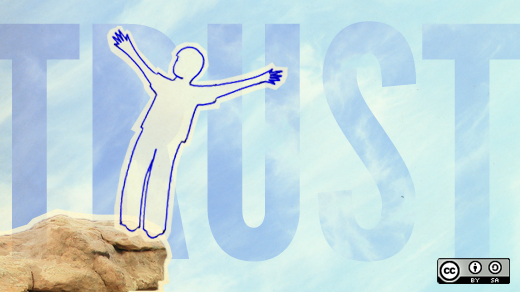
Trust: the catalyst of the open source way
Let’s face it. There are tons of projects out there in the world being run the open source way today. While the great ones can accomplish unbelievable things, the bad ones, even the average ones, often fail to achieve their goals.
 In many cases, the failed projects still used many of the tenets of the open source way, transparency, collaboration, meritocracy, etc. So why did they fail?
Some projects fail because the contributors just aren’t skilled enough at what they are trying to do. Projects also fail because people don’t have the dedication to see them through—folks give up when the going gets tough.
But in many cases, the contributors have the skills and the dedication, yet the projects still don’t work out. My view? Many of these projects fail because they are missing one simple thing.
Trust.
Collaboration works better when you trust the people with whom you are collaborating. Transparency is more believable when you trust those who are opening up to you. And it is much easier for the best ideas to win when there is a base level of trust in the community that everyone is competent and has the best interests of the project at heart.
A successful open source project needs a culture of trust much more than a project not being run the open source way. Why?
[Read the rest of this post on opensource.com]
Toyota gives customer-driven design the green light
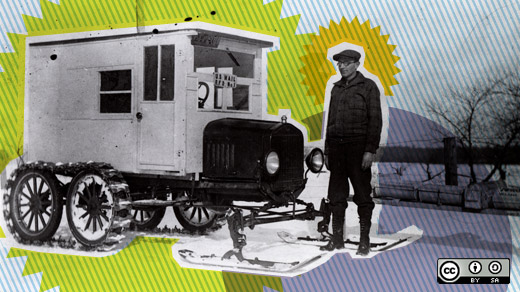
A few weeks ago, Red Hat CEO Jim Whitehurst wrote an article for BusinessWeek suggesting that Toyota might benefit from doing things the open source way when it comes to building the software inside its automobiles.
 From Jim’s article:
Open source is about leveraging the power of participation to solve complex problems such as manufacturing, health care, and government. This advantage is why numerous 21st century successes—from Google to Facebook to Wikipedia—are all based on open-source software and principles. It may also be how Toyota can improve its vehicles and ultimately regain consumer trust.
Toyota may be listening.
Last week, Associated Press reported that Toyota has opened a new Design Quality Innovation Division. The new group will be led by Kiyotaka Ise, formerly of Toyota’s Lexus subsidiary, and will be tasked with more quickly reflecting customer feedback in automobile design.
[Read the rest of this post on opensource.com]
Is the word “community” losing its meaning?
Poor words. As they get more popular, as we give them more love, we also keep trying to shove in new meaning to see if they can take it.
 In the technology industry, this happens over and over. Take “cloud computing,” which used to mean something pretty specific and now means essentially “on the Internet” as far as I can tell. Outside the technology industry, take “news,” which also used to mean something, and now is a muddy mess of news/editorial/advertising.
We’ve even been accused of muddying the term “open source” here on opensource.com (a debate I love to have—there are smart opinions on both sides: protect the core vs. extend the audience).
So when I read a recent post by Gartner analyst Brian Prentice entitled Defining & Defending The Meaning Of “Community” – An Open Source Imperative, I was familiar with the lens he was looking through already.
Brian’s argument? According to his post, community used to mean “a collection of people whose defining characteristic is shared participation.” I might add “and a common purpose or vision.”
But now the word community is often being used to refer to any ol’ collection of people. From the article:
[Read the rest of this article on opensource.com]
Which is better: efficient markets or efficient communities?
In my post last week, I talked about what I see as inefficiencies in the system design of many crowdsourcing projects. Today, I thought I’d stick with the inefficiency theme after reading a blog by Umair Haque entitled The Efficient Community Hypothesis (thanks to Rebecca Fernandez for pointing it out).
 In this post, Haque makes the case that the efficient market hypothesis often talked about by finance types should be replaced by something he calls the efficient community hypothesis.
From the post (all emphasis mine):
“…where efficient markets incorporate “all known information,” efficient communities incorporate “the best known information.” An efficient market is a tool for sorting the largest quantity of info. But an efficient community is a tool for sorting the highest quality info.”
[Read the rest of this post on opensource.com]
Why the open source way trumps the crowdsourcing way
A while back, I wrote an article about why the term crowdsourcing bugs me. Another thing that drives me nuts? When people confuse crowdsourcing and open source. My friend David Burney wrote an interesting post on this subject a while back highlighting the differences.
 It finally hit me the other day just why the open source way seems so much more elegantly designed (and less wasteful) to me than what I’ll call “the crowdsourcing way.”
1. Typical projects run the open source way have many contributors and many beneficiaries.
2. Typical projects run the crowdsourcing way have many contributors and few beneficiaries.

It’s such a simple concept, it seems obvious. Let’s look at a few examples to illustrate why this simple difference means so much.
[Read the rest of this post on opensource.com]
Community-building tip: surprise is the opposite of engagement
In the interview with Chris Blizzard I posted last week, near the end of the article Chris attributes a phrase to Mozilla CEO John Lilly:
“Surprise is the opposite of engagement.”
 This may be one of the most simple, brilliant things I have ever heard someone say when it comes to creating engaged, active communities.
When we talk about building communities the open source way, we often mention transparency and openness as critical elements of any community strategy. But when I saw this quote, it reminded me why transparency and openness are so important.
When we are open with people, we avoid surprising them. We keep them in the loop.
Nothing kills someone’s desire to be an active contributor in a community more than when they feel like they’ve been blindsided. By a decision. By an announcement. By the introduction of a new community member.
Few things help a community get stronger faster than simply engaging community members every step of the way. Asking them for input first. Ensuring they are “in the know.”
When thinking about the community you are trying to create, maybe start asking yourself questions like:
[Read the rest of this post on opensource.com]
Five questions about building community with Chris Blizzard of Mozilla
I’ve always been a fan of the Mozilla Foundation, and not just because of the Firefox web browser. As catalyst for some of the great communities in the open source world, Mozilla is something of a recipe factory for what to do right when it comes to building community. As it turns out, Mozilla’s Director of Developer Relations, Chris Blizzard, is a long time friend of mine.
 In fact, this is not the first time I’ve interviewed him– my first Blizzard interview experience was back in 2002 when Mozilla 1.0 came out and he and I both worked for Red Hat.
I spent some time with Chris to discuss his experiences and learn more about community-building the Mozilla way.
1. When I first met you ten years ago, you were a Red Hat employee with a day job keeping the redhat.com website up and running, and, even then, you were hacking on Mozilla for fun in your spare time. Now you run developer relations for Mozilla, and you’ve had some other amazing experiences, including working on the One Laptop Per Child project, along the way.
It strikes me that you are a great case study of someone who has achieved success in the meritocracy of open source by doing good work. Knowing what you know now, if you were starting from ground zero as a community contributor, how would you get started?
That’s kind of a tough question because I don’t have that perspective anymore. I know too much about how these communities operate to be able to answer that with the fresh face of someone new to a project. But, honestly, I think that that if I were to guess I would say find something that you’re passionate about and just start working on it. My own case is instructive.
[Read the rest of this post on opensource.com]
Can truly great design be done the open source way?
A few weeks ago, I wrote an article about Apple and open innovation. The discussion in the comments about Apple’s success, despite their non-openness, was pretty interesting. Greg DeKoenigsberg started things off with this salvo:
“No community could build something as gorgeous as the iPhone; it requires the singular vision of a beautiful fascist, and the resources of a gigantic company, and a world full of users who would happily trade simplicity and certainty for the ability to tinker.”
 I think few people would argue that one of Apple’s greatest strengths is their amazingly consistent, and consistently beautiful, design work. And when I say design, I mean both “little d design” (their stuff looks awesome) and “big D Design” (their systems, processes, and experiences are expertly rendered).
From a design perspective, Apple has figured out how to make lightning strike in the same place over and over again.
Today, I want to ask a question that I’ve been thinking about for a long time:
Can truly great design be done the open source way?
Meaning, can a group of people designing collaboratively, out in the open, ever do the kind of consistently beautiful design work that Apple does? Or is Greg right, that “no community could build something as gorgeous as the iPhone”?
Both of my partners at New Kind, David Burney and Matt Muñoz, are designers by background. Both of them have significant open source experience (David spent almost 5 years as the VP of Communications at Red Hat, Matt worked on many Red Hat projects, including designing the Fedora logo), so the three of us have talked about this subject many times before.
[Read the rest of this post on opensource.com]
A modest proposal to save The New York Times
I love The New York Times, the best newspaper in the world. There is no greater pleasure than sitting out on the patio on a Sunday morning, reading The New York Times, and learning.
 I stress the word learning because there are so few places left in our world where true discovery happens. Most of the time, marketers, computers, and even our friends are showing us more of what we already know we like, rather than introducing us to things we have never seen or heard of before.
In the pages of The New York Times, I can be introduced to people, places, events, ideas I would have never found on my own. Every day I read The Times I learn something new. The paper expands my understanding of the world rather than reflecting back to me the understanding I already have.
This is an incredibly valuable service. It is a service that very few media companies in the world still provide (my local paper, the Raleigh News and Observer, rarely does these days, sadly).
Yet, the ongoing conversation about how to solve the financial issues of The New York Times revolves around fixing the business model for newspapers. Most experts say the model is fundamentally broken, and a report released last week by the Pew Research Center’s Project for Excellence in Journalism doesn’t have a lot of good news for the future of journalism as a whole.
From my vantage point, the answer to fixing The New York Times will not come from exploring a revolutionary business model. It will come from a revolutionary brand, culture, and community model. Let me explain.
Hey, I Wrote a Book!

Available now in print and electronic versions.
 Dark Matter Matters