Dark Matter Matters
brand
Apple, Google, and the open vs. closed positioning war
Over the last few months, the battle to define the meaning of the word “open” has intensified into one of the more interesting brand positioning exercises I’ve seen in the technology industry (if you aren’t familiar with brand positioning and would like to learn more, consider starting here).
 I thought I’d do a quick report from the front lines, diving in specifically to examine the battle for smartphone leadership, and looking at things from a brand positioning strategy perspective.
Google Goes on Offense
Think back to 2009 and the state of the smartphone industry. The iPhone had completely redefined the entire market, while Google was just beginning to see traction with Android and looking at a long struggle to catch up with Apple.
While most other smartphone makers were attempting to catch up playing by Apple’s rules in the market Apple defined (usually a losing strategy in the long term when the leader has a solid head start), Google took a different approach—they tried what now looks to me looks like a classic repositioning strategy.
[Read the rest of this post on opensource.com]
A community-building perspective on the Gap logo controversy
Over the last week, a handful of folks have reached out and asked me what I think about the events surrounding the launch, then crowdsourcing, then full repeal of the new Gap logo (if you haven’t already heard the story, catch up here).
 Honestly, I’d been hesitant to comment at length, partially because so many articles were hitting the best angles already (take your pick of this one, this one, this one, this one, or this one for starters), and partly because somewhere inside I secretly wondered whether the geniuses behind the Gap brand are simply playing us as pawns in a New Coke-esque scheme of diabolical marketing genius (on that point, I still don’t think I know the answer).
While most articles have focused on the aesthetics of the logo itself or on issues surrounding crowdsourcing a logo effort (note to self: must… avoid… commenting… on… crowdsourcing… so… tempting), I’ve been wondering more about the strong reaction of the Gap community.
Specifically, why did the community of customers surrounding the Gap brand have such a visceral negative reaction to the logo change? Is it really that bad? The firm in charge of the redesign has a great reputation and deep understanding of the Gap brand. How did a project run by experienced brand professionals working with one of the largest consumer brands in the world go so wrong so quickly?
For me, the answer can be found in a quote I really love from outgoing Mozilla CEO John Lilly:
“Surprise is the opposite of engagement.”
[Read the rest of this post on opensource.com]
Evaluating TEDx as a brand strategy
A big part of my day job is to help organizations with their brand positioning and strategy.
 So when I read the article in the New York Times this past Sunday about TEDx, the relatively new (and incredibly popular) offshoot of the legendary TED conference, I thought it might be a good opportunity to take a closer look. The issue?
Clearly TEDx has been a smart community-building strategy, but will it ultimately prove to be a smart brand strategy as well?
Let me take a few steps back. If you are not familiar with TED (seriously? have you been camping in Siberia?) you can learn more here.
The main TED conference is a place where smart people (with big $$ and a personal invite) go once a year to hear other smart people give short talks showcasing how smart they are. The rest of us poor, unconnected folks wait patiently for the nice TED people to release the TED talks one by one, teasing us like a painfully-slowly dripping faucet teases a man dying of thirst.
And that’s the way it worked. Until last year when, in June, TED announced a new program called TEDx that would allow anyone to organize their own TED conference anywhere in the world.
The New York Times article tells the story of what has happened with the TEDx program in a little over a year:
…there were 278 events last year in places as near as New Jersey and Florida, and as far as Estonia and China. There was TEDxKibera, held in one of Africa’s largest shantytowns in Nairobi, Kenya. And there was TEDxNASA, which had space-themed lectures.
Already this year there have been 531 TEDx events. Another nearly 750 are to take place this year and beyond.
Wow. Now that is community-driven innovation on a grand scale. From one event per year with a small number of people attending at a very high cost to almost two TED events per day, held around the world, and almost every event is free. All that in a little over a year.
I’d call that a smashing strategic success. A soon-to-be-classic community engagement story.
But if we look at the decision to create TEDx from a traditional brand or intellectual property point of view, would it also be viewed as a good strategy?
[Read the rest of this post on opensource.com]
Brand positioning tip #13: embedding positioning internally
If a tree falls in a forest and no one is around to hear it, does it make a sound? I don’t know the answer, but I can tell you that brand positioning not effectively communicated and embedded both inside and outside your organization will definitely not make a sound.
 So how do you ensure your brand positioning exercise isn’t in vain? How do you communicate your positioning both inside and outside the walls of the organization? In these next two brand positioning tips, I’ll try to answer that question. Today, we’ll tackle how to embed the brand positioning within your organization.
So here we are. Your positioning exercise is complete. You’ve identified one or more competitive frames of reference. You have clear points of difference distinguishing you from competitors. You’ve articulated the points of parity you need to achieve. And perhaps you’ve even decided on a brand mantra. Now what?
For most organizations, the next step is to build a plan to embed the positioning internally. Unless you work in a small firm, I’d recommend you don’t build this plan alone. Instead, convene a strategically-chosen team of folks to help you build the right plan for your organization.
Who should be on this team? I’d pick a group of 10 or less people from the following two sources:
Brand positioning tip #12: don’t get hung up on the words
When it comes to positioning terminology, I sometimes get questions like “what is the difference between a brand mantra and a brand essence?” or “is a point of difference the same thing as a key differentiator?”
 My answer? Don’t get hung up on the words… it’s the concepts that matter.
I have standard terminology I use for brand positioning projects, which you can read more about in my Brand Positioning Tips. I picked up most of these terms from Dr. Kevin Keller, one of the world’s foremost brand positioning experts, and the brand positioning guru we used for a lot of our Red Hat positioning work.
Kevin uses terms like point of parity, point of difference, competitive frame of reference, and brand mantra to describe his positioning process. I like these terms and they have become comfortable for me to use in my positioning work.
But often, I’ll be working with a client who approaches positioning from a slightly different point of view. Perhaps they’ll talk about what I call a brand audit as a brand diagnostic or they’ll refer to the brand mantra as the brand essence.
When working with clients on positioning projects, I operate using the when in Rome principle. I use their words instead of mine. Why? Because they are just words, after all.
What really matters is whether we agree on what the heart and soul of the brand is and what makes it different from other similar brands.
Using Kevin Keller’s terminology to describe your brand positioning won’t automatically make it good brand positioning, and some of the best-positioned brands I have ever seen were probably developed by people who had never heard of a point of parity.
So use whatever words you like as long as you understand the concepts.
Do you aspire to build a brand community or a community brand?
In my day job at New Kind, I spend quite a bit of my time working on brand-related assignments, particularly for organizations interested in community-based approaches to building their brands.
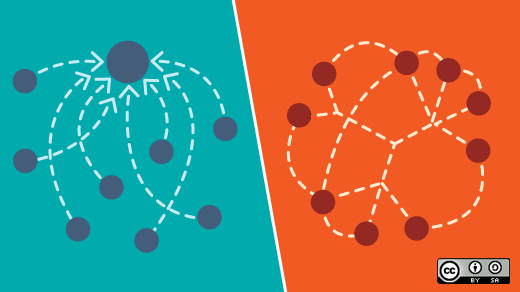 When marrying the art of community building to the art of brand building, it’s hard not to talk about building “brand communities.” It’s a convenient term, and brand experts love to trot out examples like Harley Davidson and Apple as examples of thriving communities built around brands.
The term “brand community” even has its own Wikipedia page (definition: “a community formed on the basis of attachment to a product or marque”). Harvard Business Review writes about brand communities. Guy Kawasaki writes about brand communities.
Yet almost every article I’ve read about building “brand communities” shares a common trait:
They are all written by brand people for brand people.
The result? Articles focusing on what’s in it for the brands (and the companies behind them), not what’s in it for the communities. Learn how to build a brand community so your company will succeed, not so a community will succeed.
Typical corporate thinking.
What if we turned things on their heads for a second and changed the words around? What if, instead of “brand community,” the phrase du jour was “community brand?”
[Read the rest of this post on opensource.com]
BP: the worst brand positioning mistake since the Holy Roman Empire?
For 60+ days, I’ve avoided writing a post about BP. I’ve been devastated, as I’m sure many of you have, by what has been happening in the Gulf of Mexico. We’ve all been inundated with news and stories, most of them depressing, about real lives—people, animal, plant—altered forever by the Deepwater Horizon accident.

Holy Roman Empire = neither holy, nor Roman, nor empire. BP = not beyond petroleum.
Why think about brand damage when there is so much catastrophic real damage still happening as I write this post? But after having several people ask me about it over the last few weeks, I thought I’d share some of my thoughts as well as some of the articles I’ve been reading about BP’s brand positioning debacle. It may prove to be one of the most important, albeit sad, brand positioning lessons ever.
My view? Not since the Holy Roman Empire has there been a greater misalignment between brand promise and brand experience than we see today with BP.
Dig deep into your European history memory. Not the Roman Empire with all the togas, nice buildings, gods, and gladiators. I’m talking about the really crappy one that emerged in the Middle Ages and which Voltaire famously described as “neither Holy, nor Roman, nor an Empire.”
If the Holy Roman Empire was neither Holy, nor Roman, nor an Empire, BP has certainly proven itself to not be Beyond Petroleum.
So how did this happen?
In 2000, British Petroleum hired one of the top advertising & PR agencies in the world, Ogilvy & Mather, to help them attempt a global brand transformation following the acquisition of Amoco and a few other small organizations. Their goal was to reposition BP “as transcending the oil sector, delivering top-line growth while remaining innovative, progressive, environmentally responsible and performance-driven.”
Why did I put this goal in quotes?
Because I took it directly from the BP “success story” which is still up on Ogilvy & Mather’s website (someone might want to get that down…update: 9-27-10: it looks like now they have!). The story goes on to say that the launch of the new brand position “far exceeded expectations” and resulted in high brand credibility and favorability scores and two (!) PR Week Campaign of the Year awards.
A job well done.
Except BP’s new brand promise wasn’t even in the same ballpark as its brand experience. Rather than dive into a full analysis here, I’ll point you to some great posts I found already highlighting the brand promise/brand experience gaps:
Brand positioning tip #11: the 1-2 punch
In the classic book Positioning: The Battle for Your Mind, by Jack Trout and Al Ries, there is an ongoing thematic—the overwhelming value of being #1 in a market. The reasoning? It is extremely hard to dislodge the company that captures a position in the minds of target customers first.

Grow the market like a butterfly, lead the market like a bee... or something like that.
Think about how long Coca-Cola has been the #1 cola (since the 19th century) or Hertz has been the #1 car rental company (since 1918) and you’ll get a sense for how difficult it is to displace the top brand in a market.
As we’ve learned in previous brand positioning tips, a key part of the brand positioning process involves deciding on the competitive frame of reference or references in which you’d like to position your company or brand. I emphasize references because one thing to consider is whether, in addition to positioning your brand in an existing market (where you may not be #1), you should be creating a new market in which you can be #1, because there is no one else in it yet.
Some leading business strategy thinkers refer to this as a “blue ocean strategy” where you choose to create or grow a new market rather than fighting in a competitive one that already exists (a “red ocean”).
From a brand positioning perspective, I often return to a similar principle I call the 1-2 punch.
The 1-2 punch is simple:
Punch 1: Grow the market
Punch 2: Lead the market you grow
Punch 1: You may compete in a frame of reference where you are not #1, but throwing punch 1 means putting your energy into creating or growing a different competitive frame of reference that didn’t exist in the minds of your audience before.
Punch 2: This is where you must really capitalize on the benefits of being an early mover in a market. If you throw punch one (grow the market), but do not effectively land punch 2 (lead the market you grow), you may find yourself in a world of hurt. Let’s look at a few examples:
Five questions about authenticity and the open source way with Jim Gilmore
A few months ago, I had the opportunity to meet Jim Gilmore, co-author (with Joseph Pine) of the book Authenticity: What Consumers Really Want. I first read the book a few years ago, and it really struck a nerve for me—these guys were on to something.
 So I convinced Jim to subject himself to a Five Questions interview about the place where authenticity and the open source way intersect.
CHRIS: After joining the open source world ten years ago, it didn’t take me long to figure out that most open source folks despise marketing as it is traditionally practiced. Is there something inherently inauthentic about the language of marketing? Perhaps open source folks have a low tolerance for inauthenticity?
JIM: I often quote from a letter-to-the-editor that appeared in the Harvard Business Review following the publication of our article, “Welcome to the Experience Economy.” In this letter, Robert Jones of Wolf-Olins shared his definition of a brand as “the promise of an experience.”
Joe Pine and I responded by saying Amen to that, but added that so often the actual experience fails to fulfill against the promise. Indeed, marketing in general, and advertising in particular, has become a giant phoniness-generating machine. And not just the language of marketing, but the very practice of marketing so often serves to erode the perception of authenticity among consumers—by making promises that bear little resemblance to the actual experience encountered.
So much creative talent today is engaged in making promises as marketing instead of being employed to create compelling experiences as actual output. The experience itself should be the marketing.
My friend Robert Stephens, founder of the Geek Squad, is fond of saying, “Advertising is the tax you pay for being unremarkable.” I feel that way about most marketing. I’d like to see creative talent diverted from making messages about goods and services and used instead to help create truly remarkable experiences, ones so compelling that they command a fee as product.
[Read the rest of this post on opensource.com]
Facebook breaks the brand permission rules
Back in February, I wrote a post about how Google stepped beyond its brand permission limits with the launch of the Buzz platform, a classic brand mistake (read more about brand permission here or here). Over the last few months, Facebook has also moved into a dangerous brand space, and may be doing permanent damage to its brand in the process.
 You’ve probably seen people (or participated in) spewing venom at Facebook about its privacy practices, so I certainly won’t rehash that stuff here. If this is news to you, and you want to see what people are saying and how Facebook is responding, this interview in The New York Times with Facebook’s VP for Public Policy from earlier this week is a good starting point.
So, beyond the (really good) privacy reasons, why is it so bad that Facebook is making more of your information public by default? What’s the brand mistake? Let’s again look to the brand tags site for some clues. According to the site, the top terms associated with Facebook are:
addictive
annoying
boring
college
community
friends
fun
kids
lame
myspace
networking
people
social networking
stupid
waste of time
young
I’ve put in bold a few terms I think are especially important. If I was to put them in a sentence, it’d read something like “Facebook is a social networking site where people have fun or waste time with their community of friends.”
For most people, this sentence describes the service they signed up for. And hundreds of millions of people must value the Facebook brand for this purpose, because Facebook has been one of the fastest growing platforms the world has ever seen.
Hey, I Wrote a Book!

Available now in print and electronic versions.
 Dark Matter Matters